Meet MB 449586
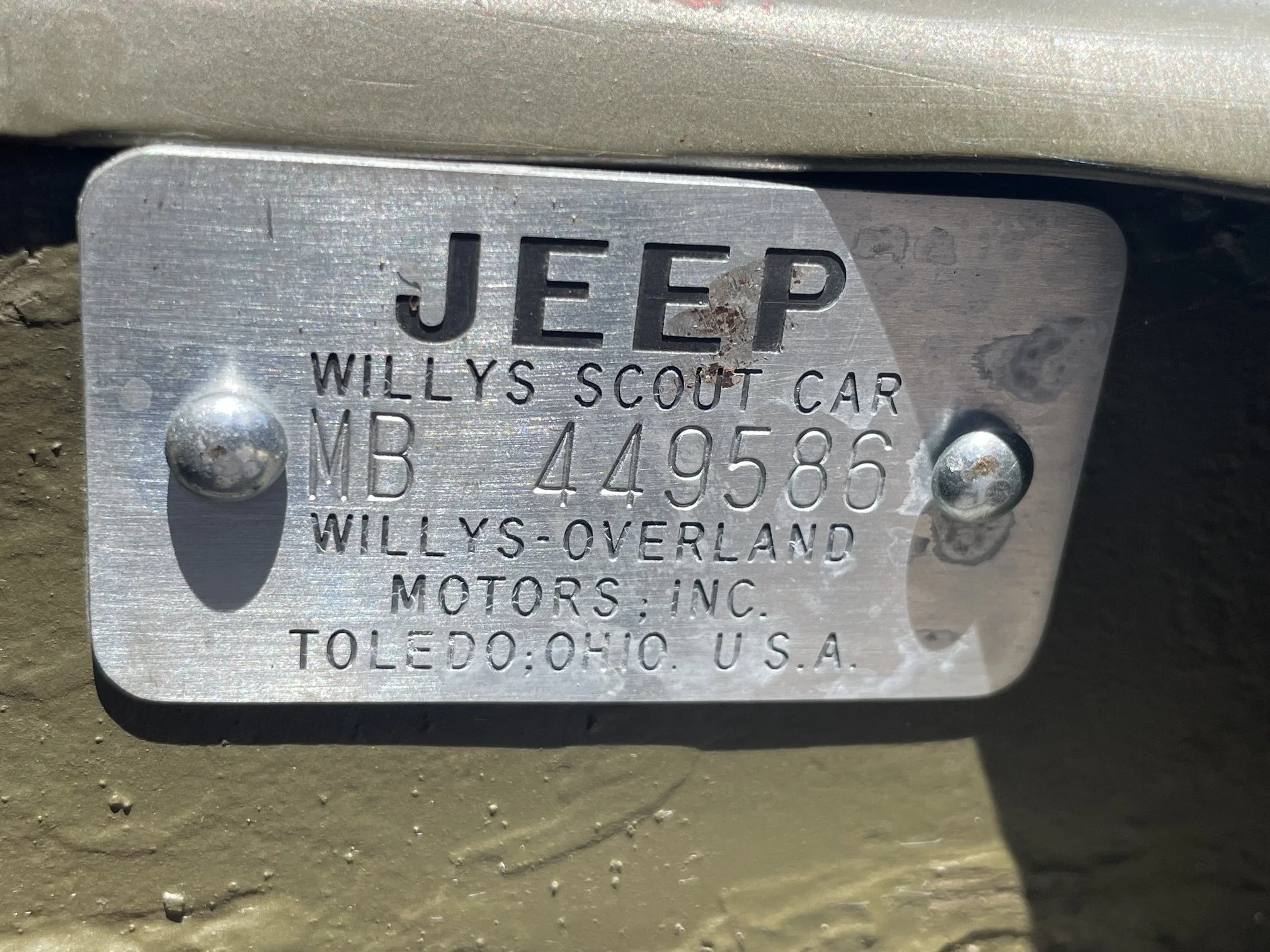
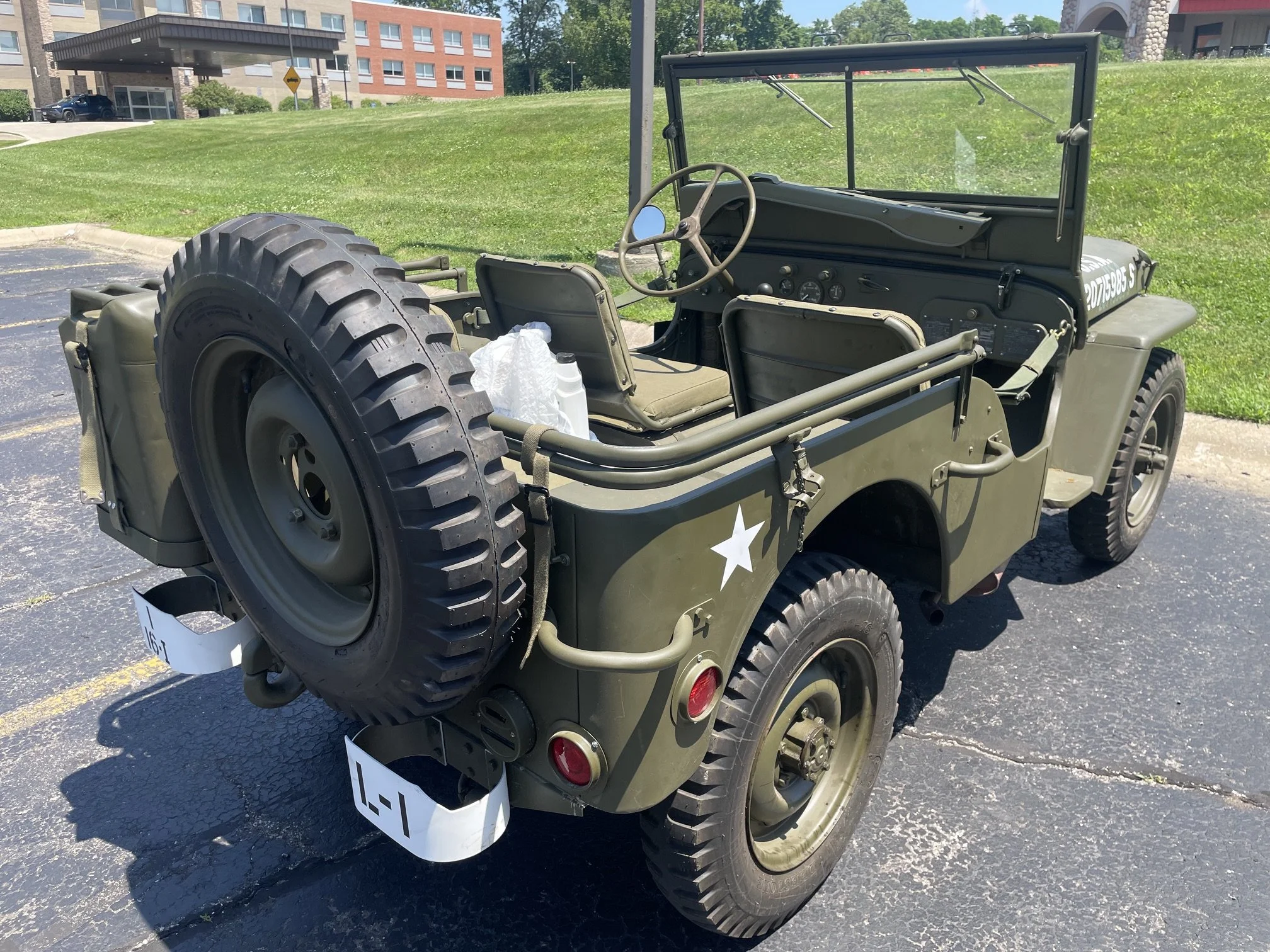
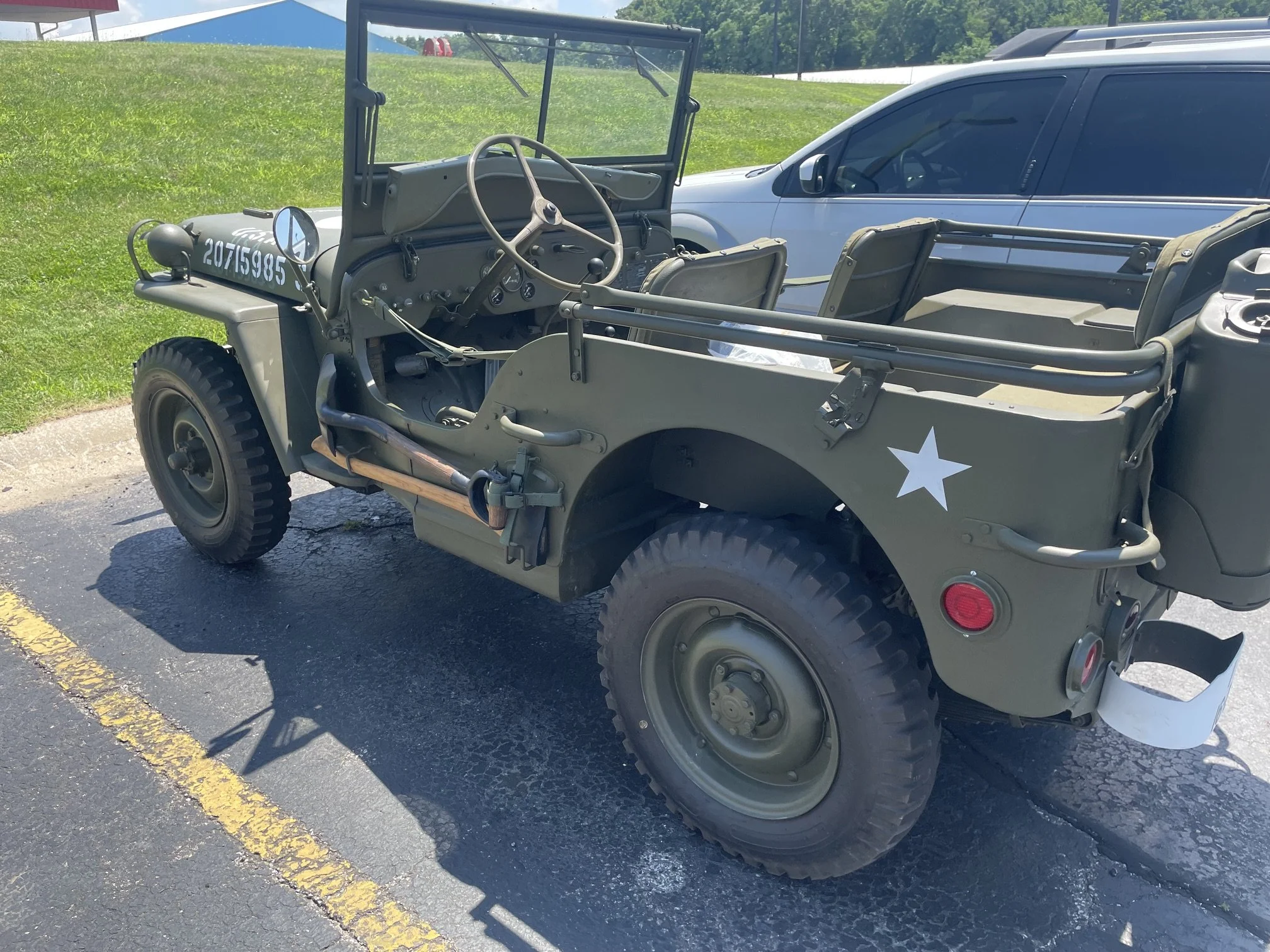
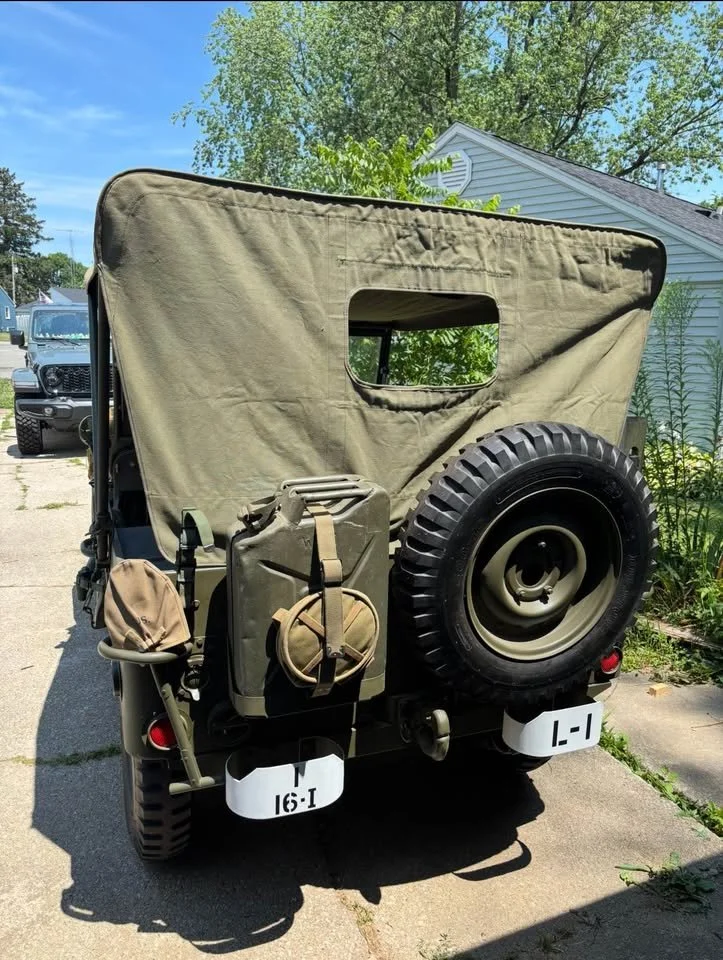
This is a 1945 Willys MB, serial number MB 449586.
It was delivered on June 20, 1945, by Willys Overland Motors of Toledo, Ohio. Built during the final months of World War II, it belongs to the family of small military Jeeps that became some of the most recognizable vehicles ever made.
The Willys MB was rugged, simple, and extraordinarily useful. Jeeps carried soldiers, officers, radios, stretchers, supplies, tools, and nearly anything else the Army needed to move.
Today, MB 449586 is still running, driving, and making people smile.
“It is not fast, quiet, comfortable, or particularly practical. That is exactly why it is so much fun.”
Quick Facts
Vehicle: 1945 Willys MB
Serial Number: MB 449586
Delivered: June 20, 1945
Manufacturer: Willys-Overland Motors, Inc.
Engine: Willys Go Devil four-cylinder engine
Electrical System: 6-volt
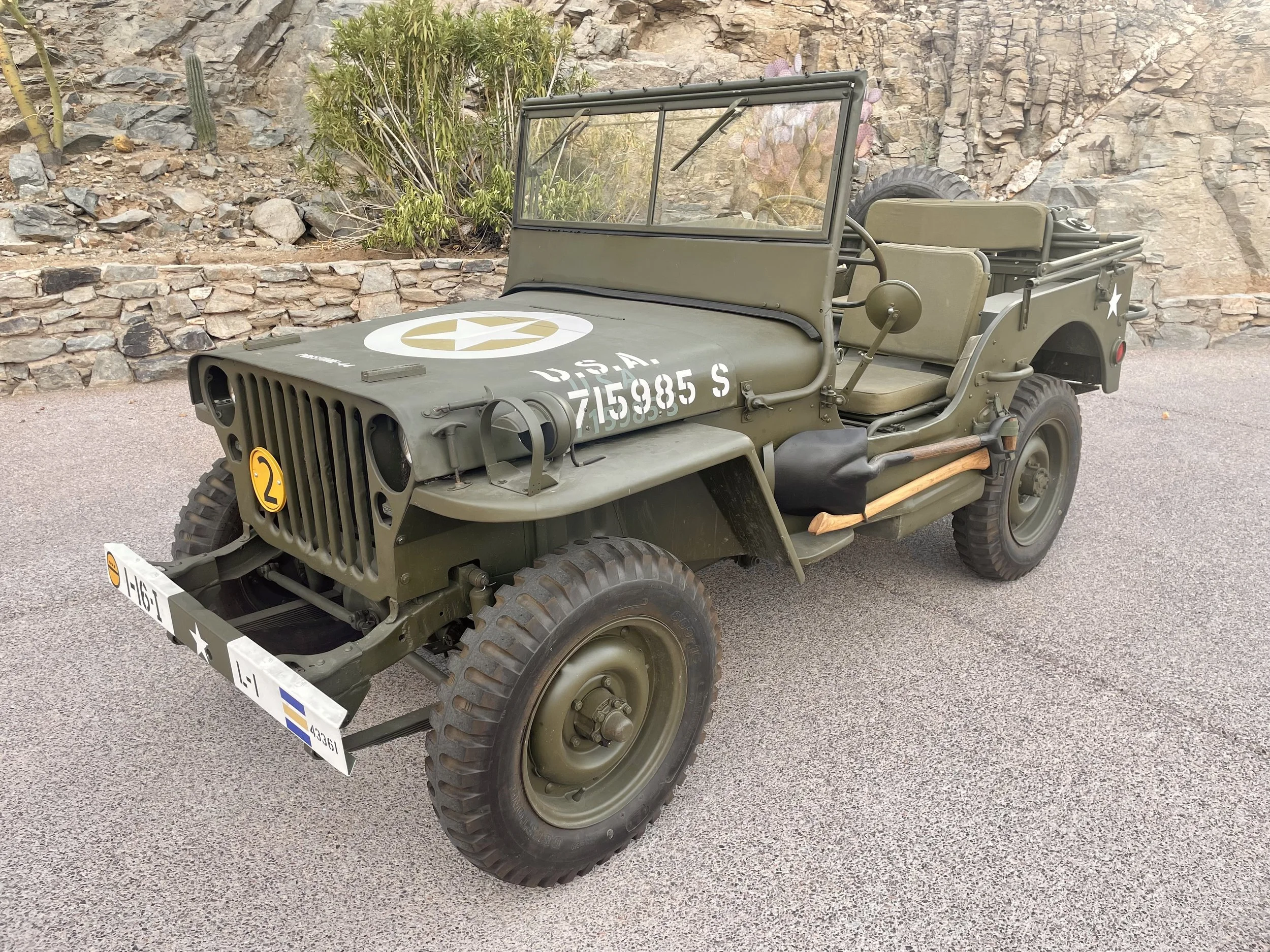
Markings: L Company, 3rd Battalion, 16th Infantry Regiment, 1st Infantry Division
Purpose Today: Running tribute and preservation project
A Very Different Kind of Driving
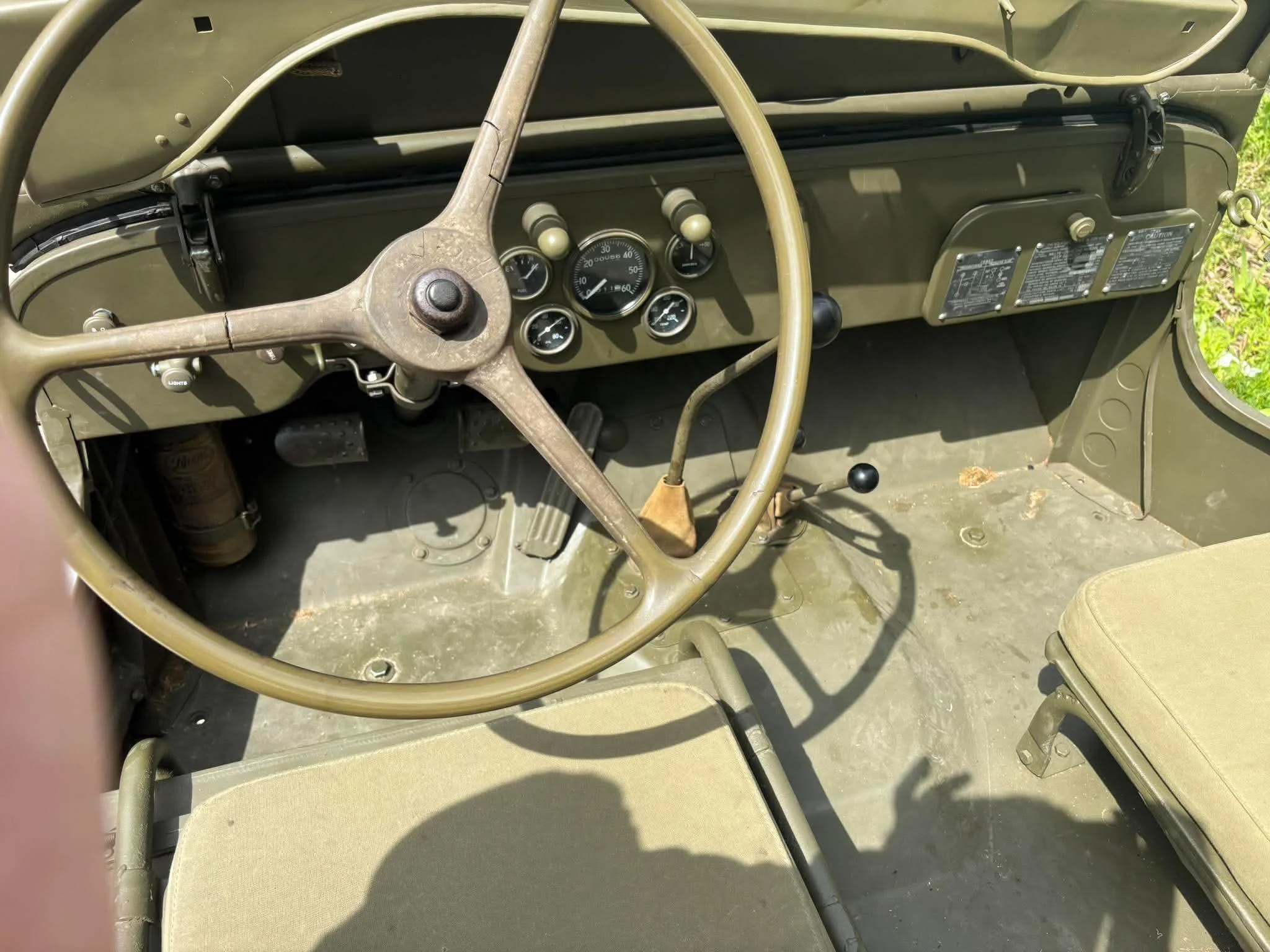
This Jeep comes from a time before modern convenience.
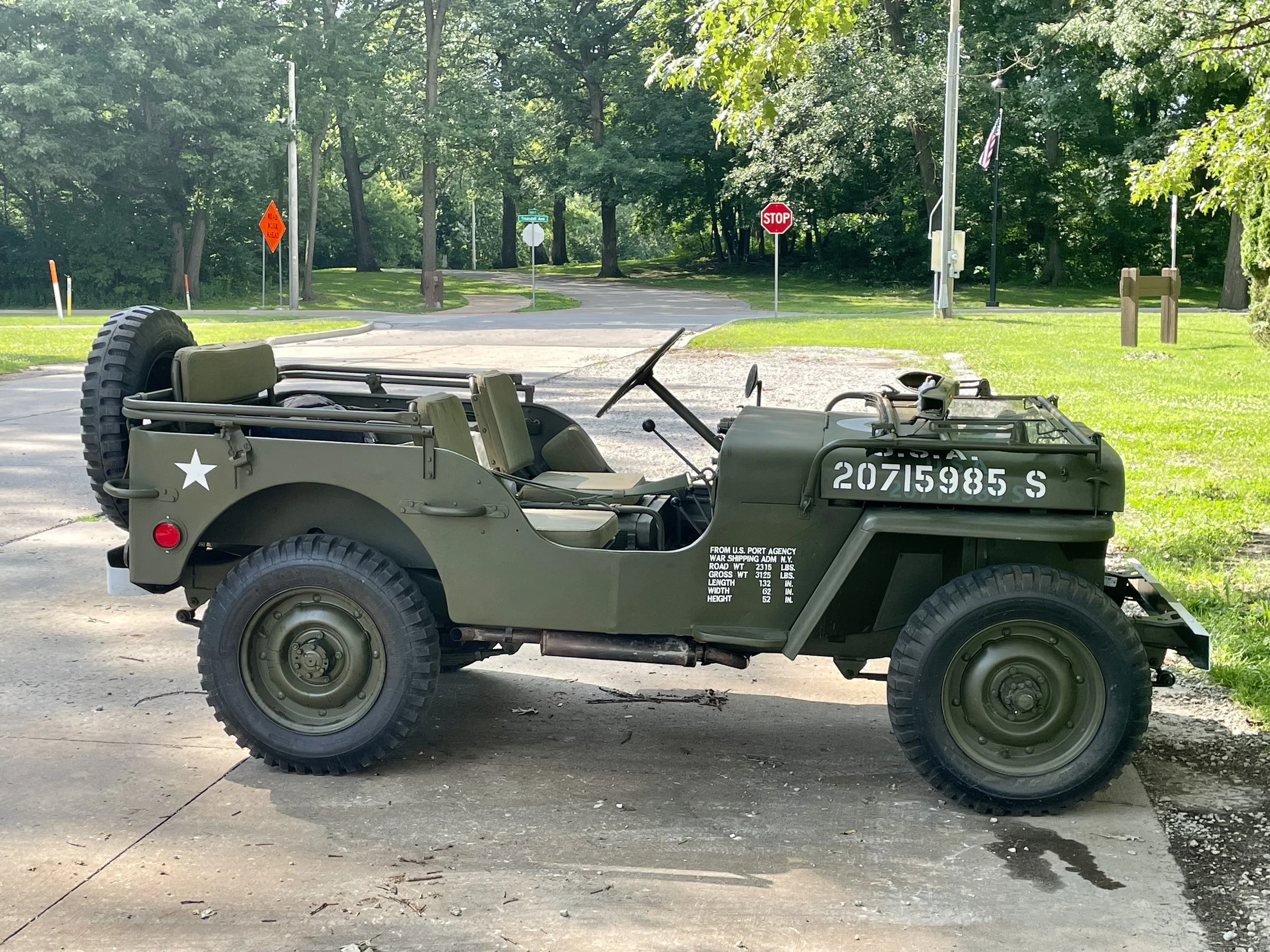
It was built without seatbelts, airbags, power steering, doors, side windows, a radio, air conditioning, or anything resembling a cupholder, and it remains that way today.
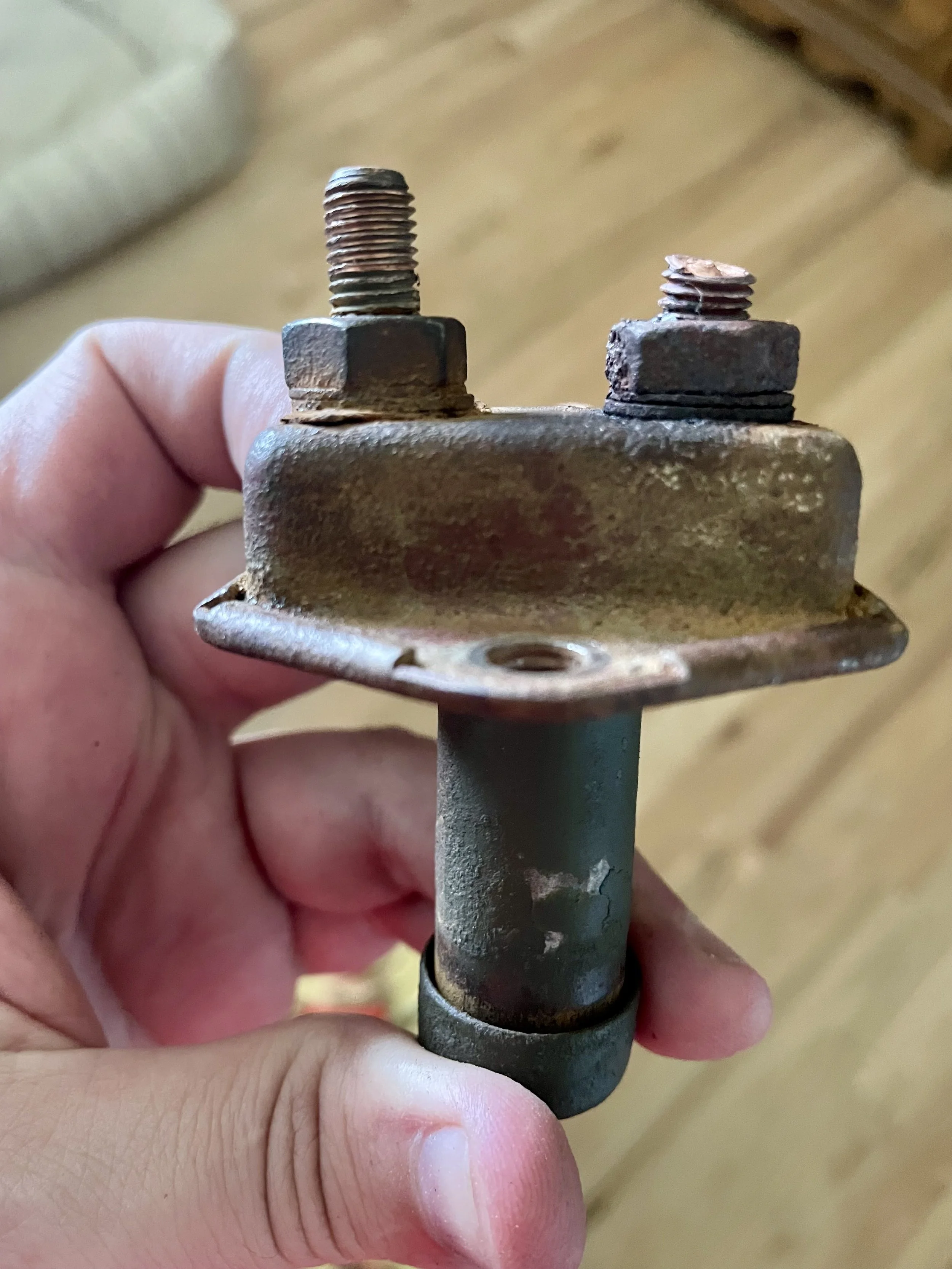
To wake it up, you turn on the ignition, pull the choke when needed, and press the starter switch with your foot.
The steering is entirely manual. The brakes require planning. The windshield can fold down. The engine, road, wind, and everything happening around you are part of the experience.
“No doors. No windows. No radio. No power steering. Four wheels, a simple engine, and an enormous amount of fun.”
Driving it feels less like riding in a modern vehicle and more like stepping directly into 1945.
Did You Know?
The hand crank at the front can turn the engine if the electric starter is unavailable.
The crank does not create its own ignition, so the Jeep still needs battery power for the ignition coil and spark plugs. Starting an engine this way is a reminder of just how simple and mechanical these vehicles were.
What the Markings Mean
MB 449586 is marked as a tribute to:
L Company
3rd Battalion
16th Infantry Regiment
1st Infantry Division
The Big Red One
The 1st Infantry Division fought in North Africa, Sicily, Normandy, the Battle of the Bulge, and Germany.
The 16th Infantry Regiment was part of the division and landed at Omaha Beach on D-Day, June 6, 1944. L Company belonged to the regiment’s 3rd Battalion.
This Jeep was delivered on June 20, 1945, more than a year after D-Day, so it was not present at Omaha Beach. Its markings honor the soldiers of L Company, 3rd Battalion, 16th Infantry Regiment, and the 1st Infantry Division.
Reading the Front Bumper
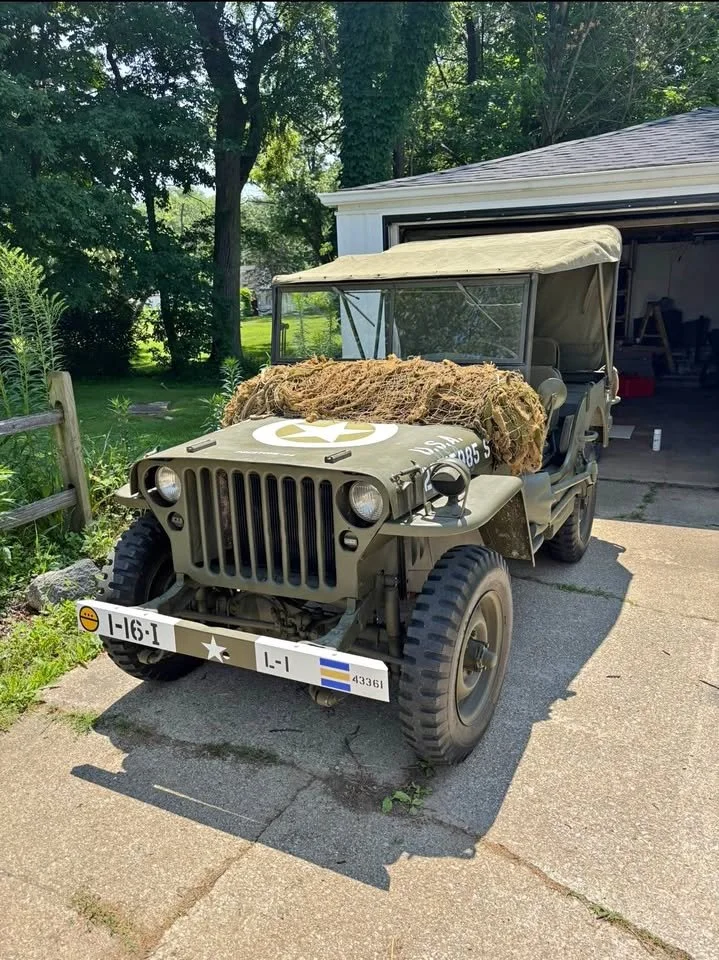
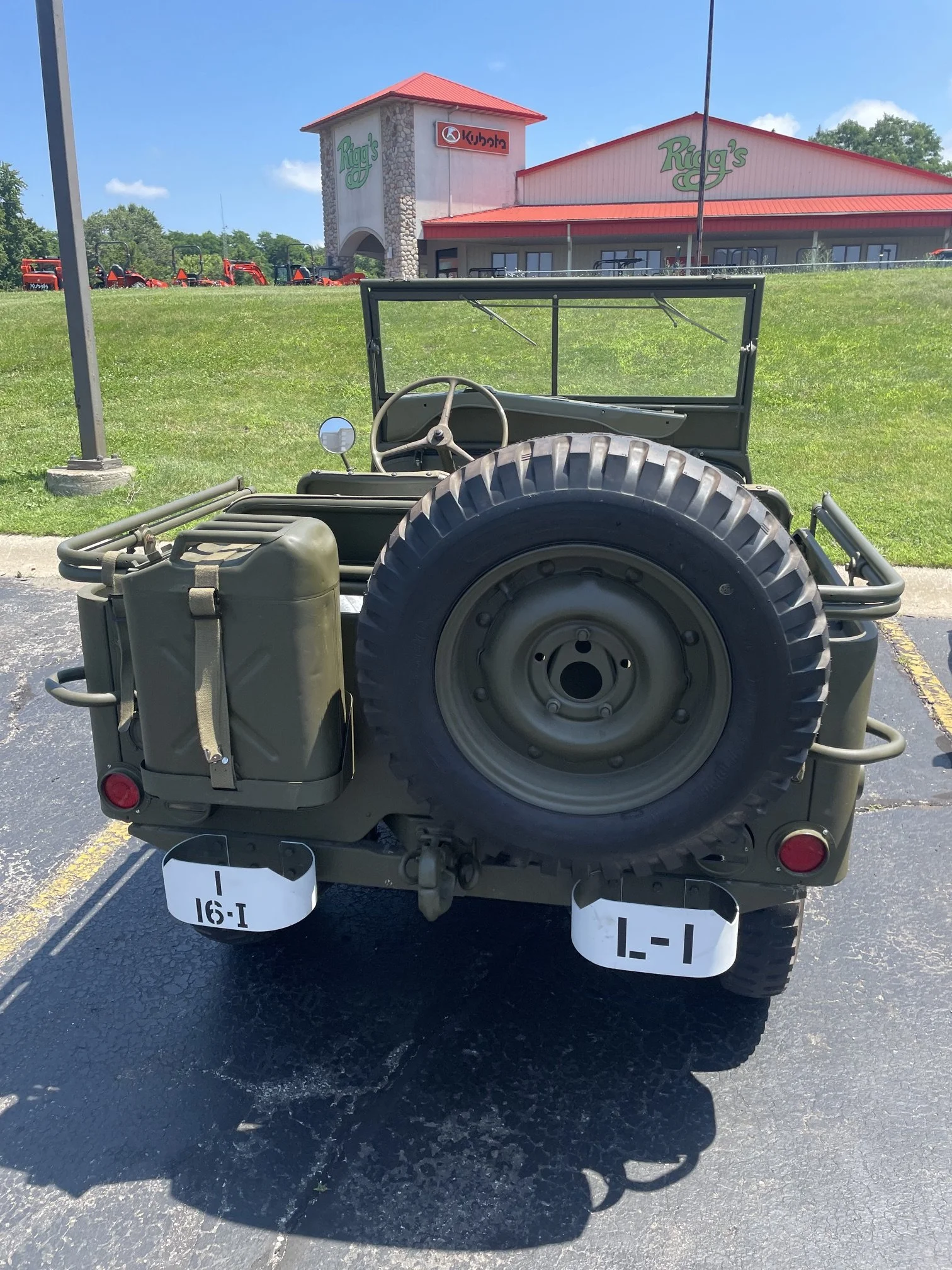
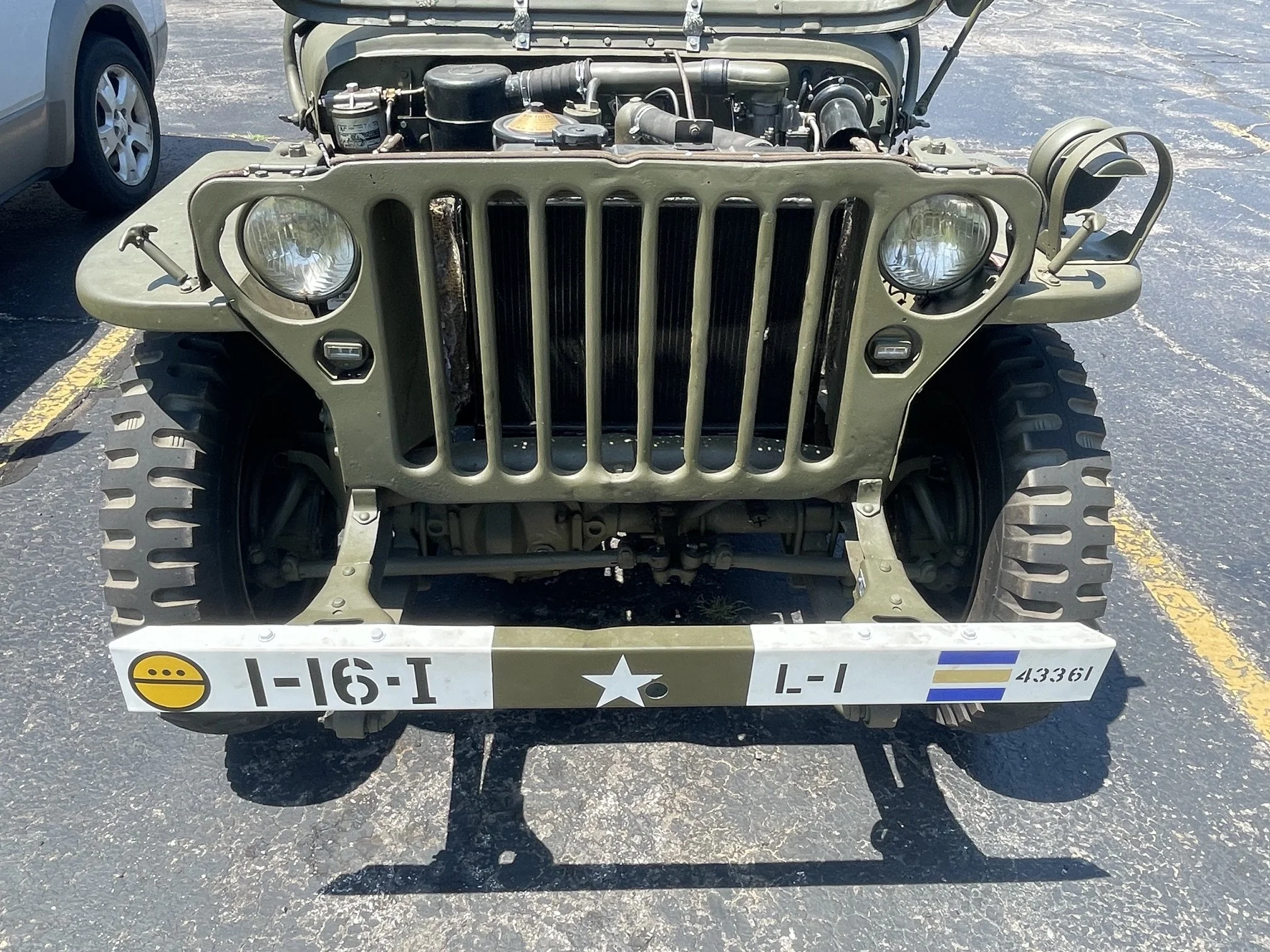
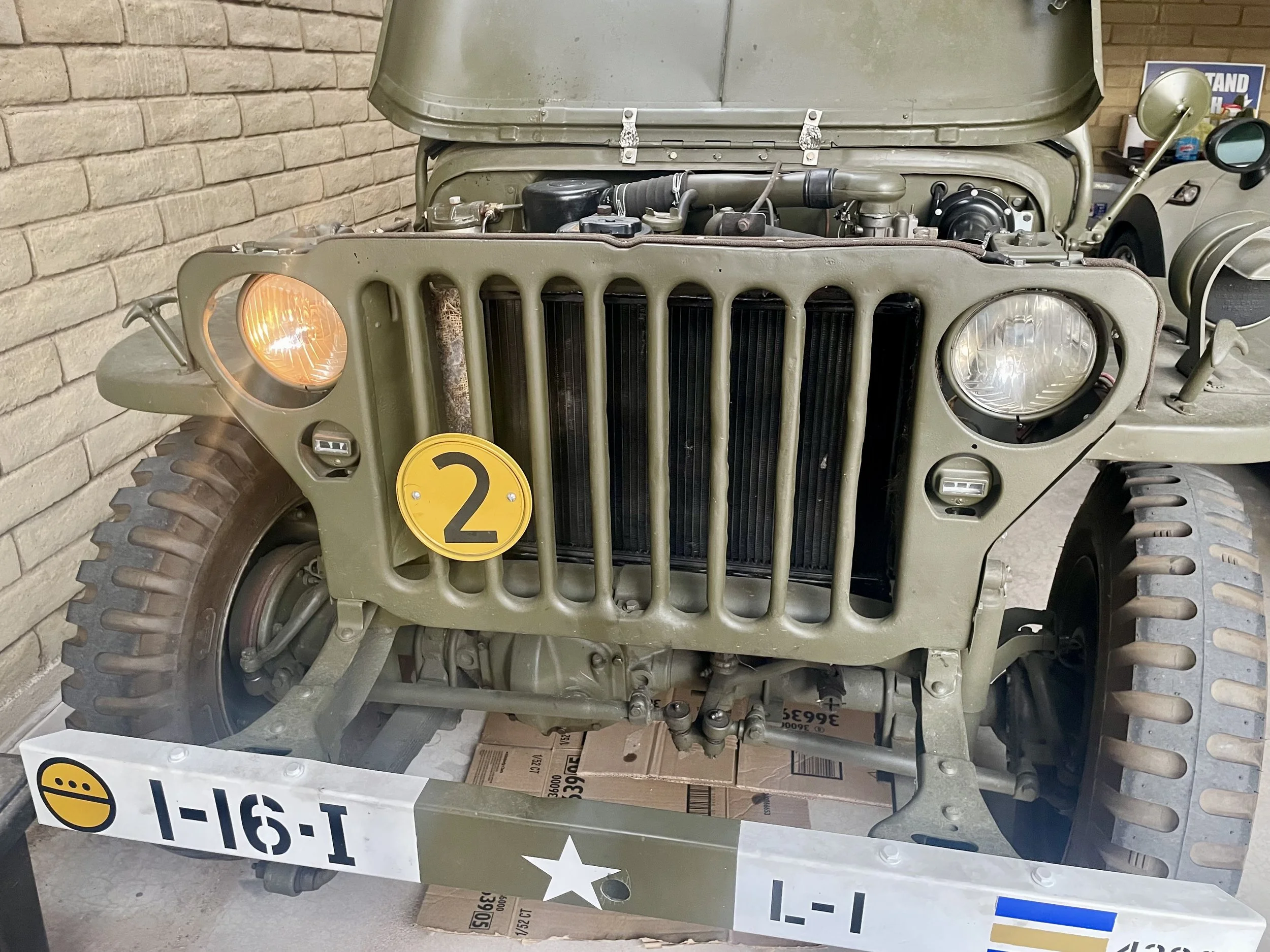
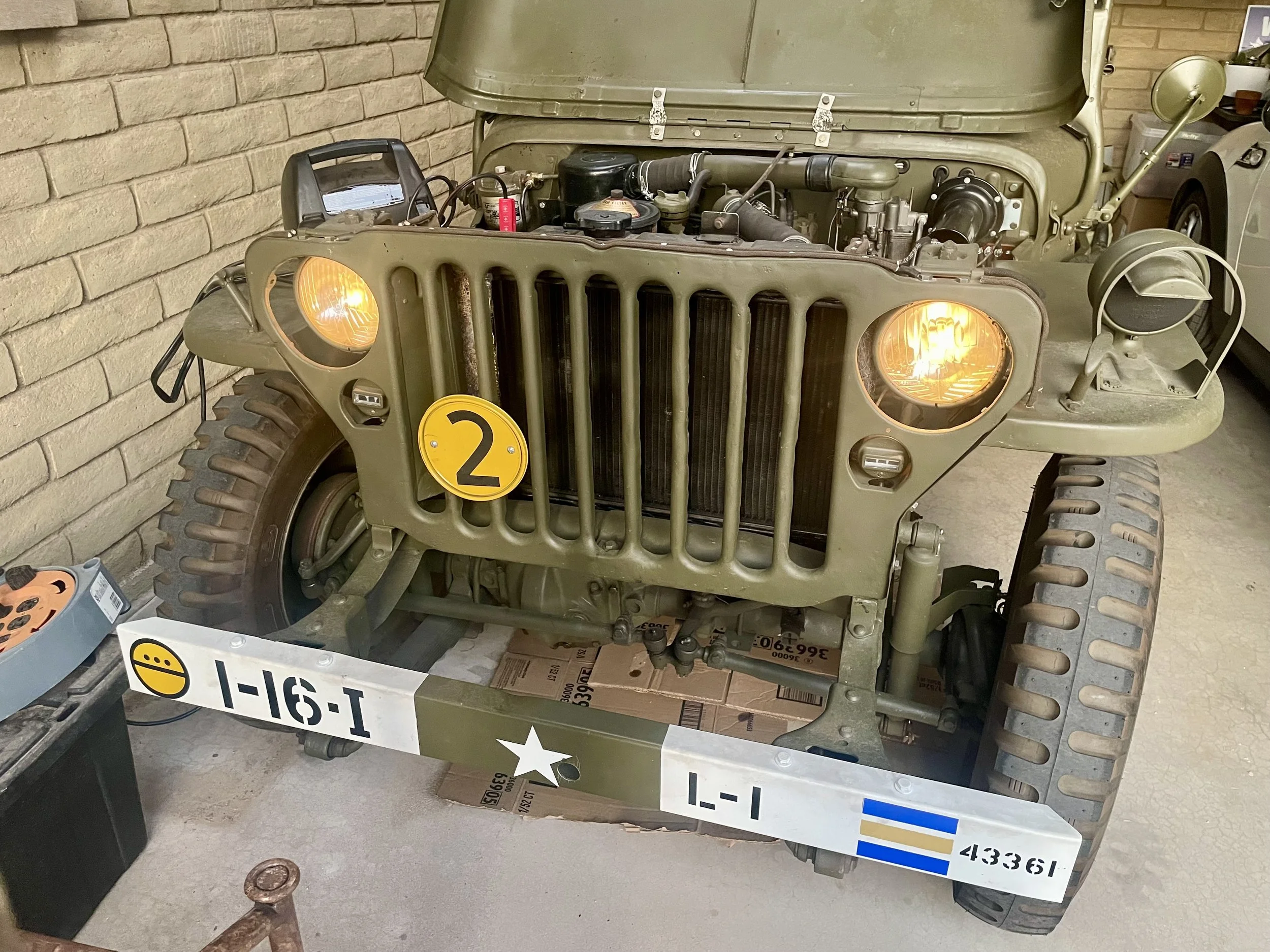
The markings on the front bumper follow the style used to identify Army units and individual vehicles.
1-16-I represents:
1st Infantry Division
16th Infantry Regiment
L-1 represents:
L Company
Vehicle 1
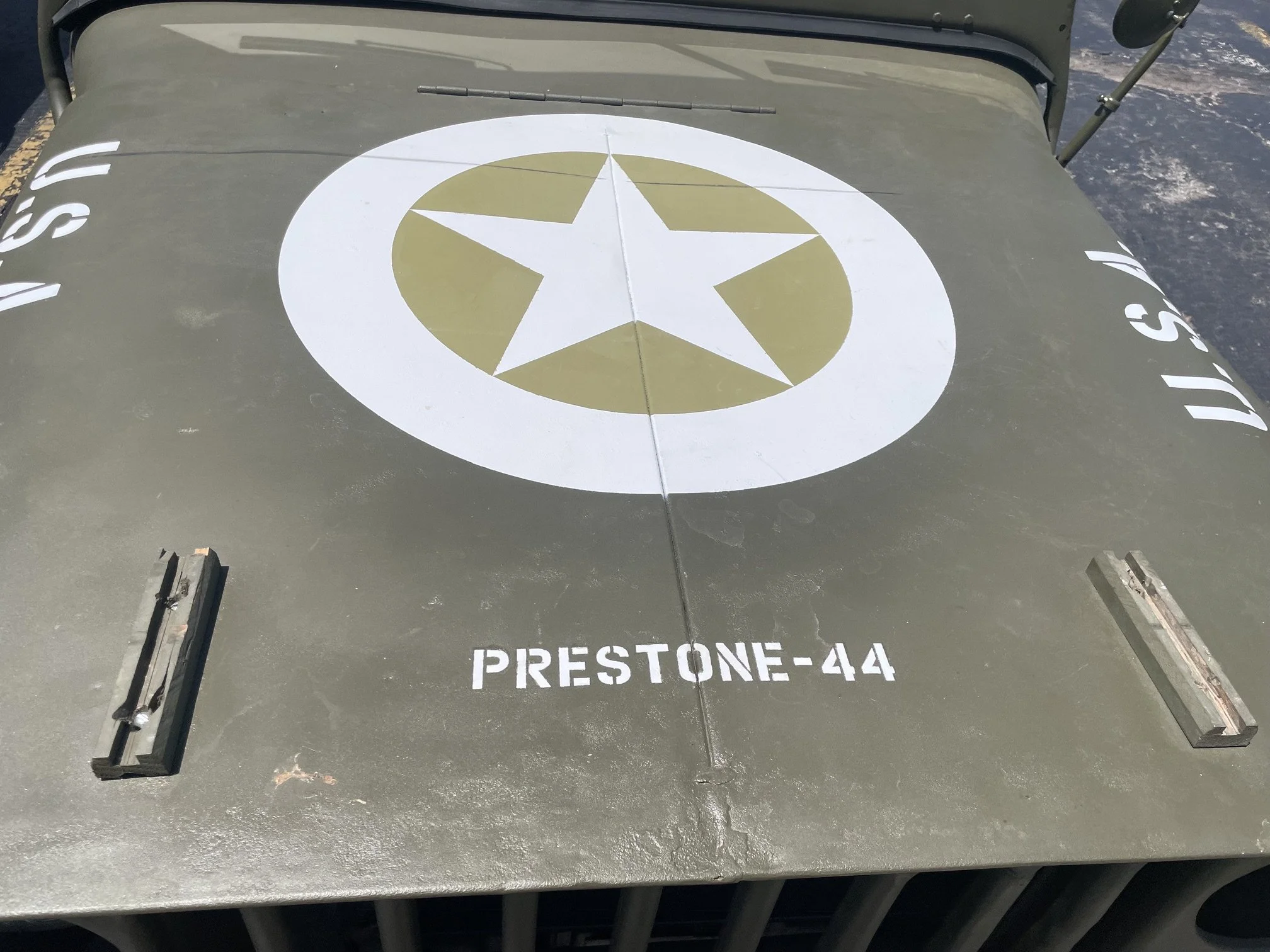
The large white star was the national recognition symbol used on American military vehicles during World War II.
What Does the Yellow 2 Mean?
The yellow circle with the number 2 is a bridge classification marker.
Military engineers used these numbers to quickly determine whether a bridge, ferry, or temporary crossing could safely support a vehicle. A lightweight Jeep received a much lower classification than a truck or tank.
It is a small marking with a very practical purpose.
The Yellow Circle with Three Dots
The yellow circle with three dots is a tactical style marking connected to this Jeep’s unit presentation.
In this marking scheme, the yellow circle represents the 16th Infantry Regiment. The three dots represent the 3rd Battalion.
Together, the markings complete the tribute to L Company, 3rd Battalion, 16th Infantry Regiment, 1st Infantry Division.
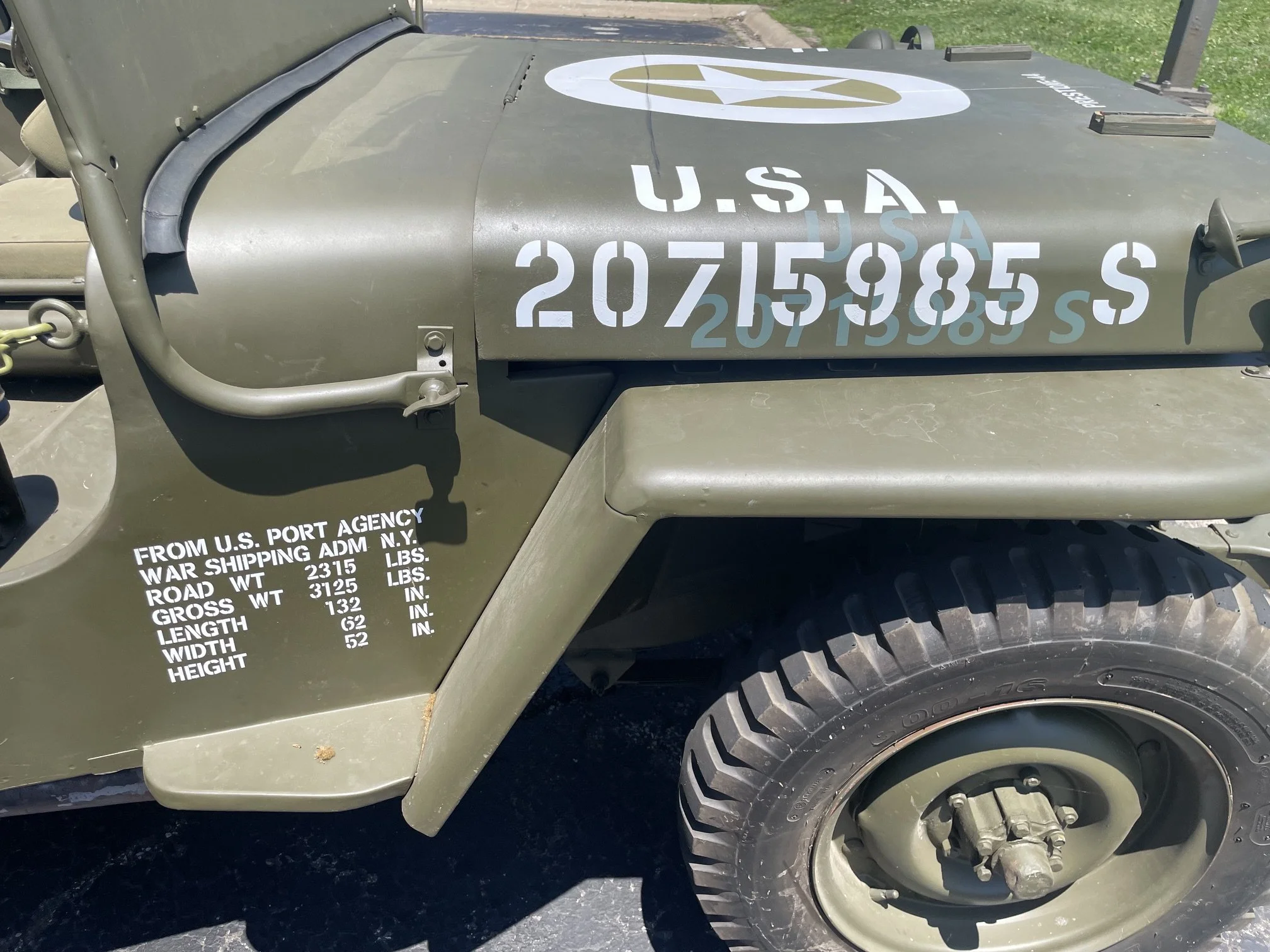
The Hood Number
The hood carries the registration number:
U.S.A. 2075985-S
Army registration numbers served as the military vehicle’s official identification number.
The S indicates radio suppression. Electrical components were designed or modified to reduce interference with military radio equipment.
PRESTONE-44
The PRESTONE-44 stencil is a wartime style maintenance marking connected to antifreeze servicing and winter preparation.
Maintenance markings allowed soldiers and mechanics to quickly see when important work had been completed. It may look decorative today, but markings like this once communicated useful information at a glance.
Life Today
MB 449586 is not an untouched museum artifact.
Like many military vehicles that survived long after the war, it has been repaired, rebuilt, and restored over time. It is best understood as a living restoration that preserves the identity, appearance, and experience of a 1945 Willys MB.
The goal is not to make it perfect or erase every sign of age.
The goal is to keep it safe, dependable, understandable, and on the road.
“History does not have to sit still to be preserved. Sometimes the best way to honor it is to keep it running, keep it moving, and keep sharing it with the next person who stops to look, learn, and smile.”
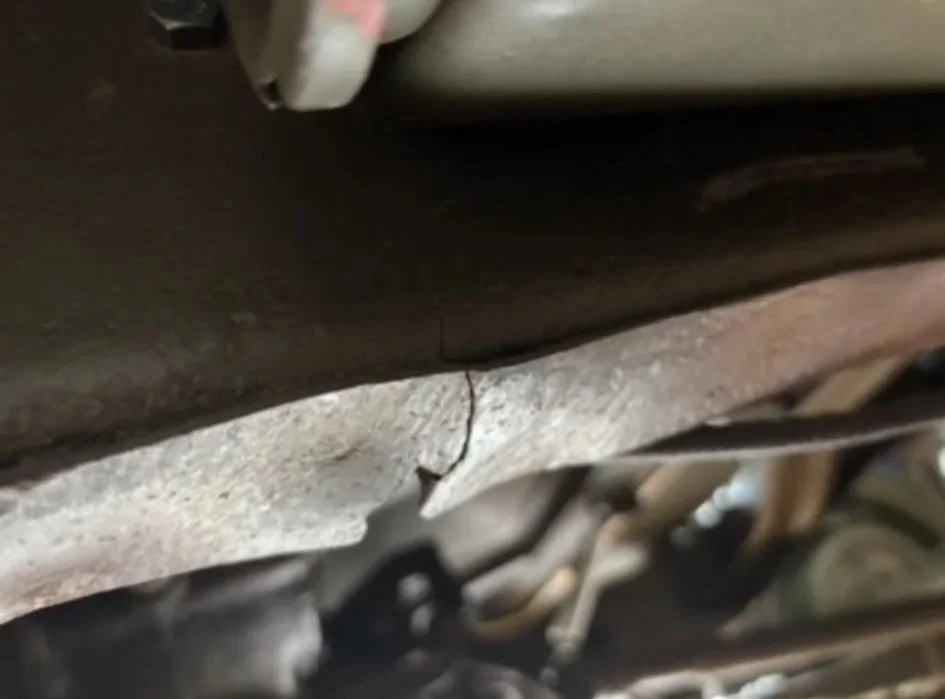
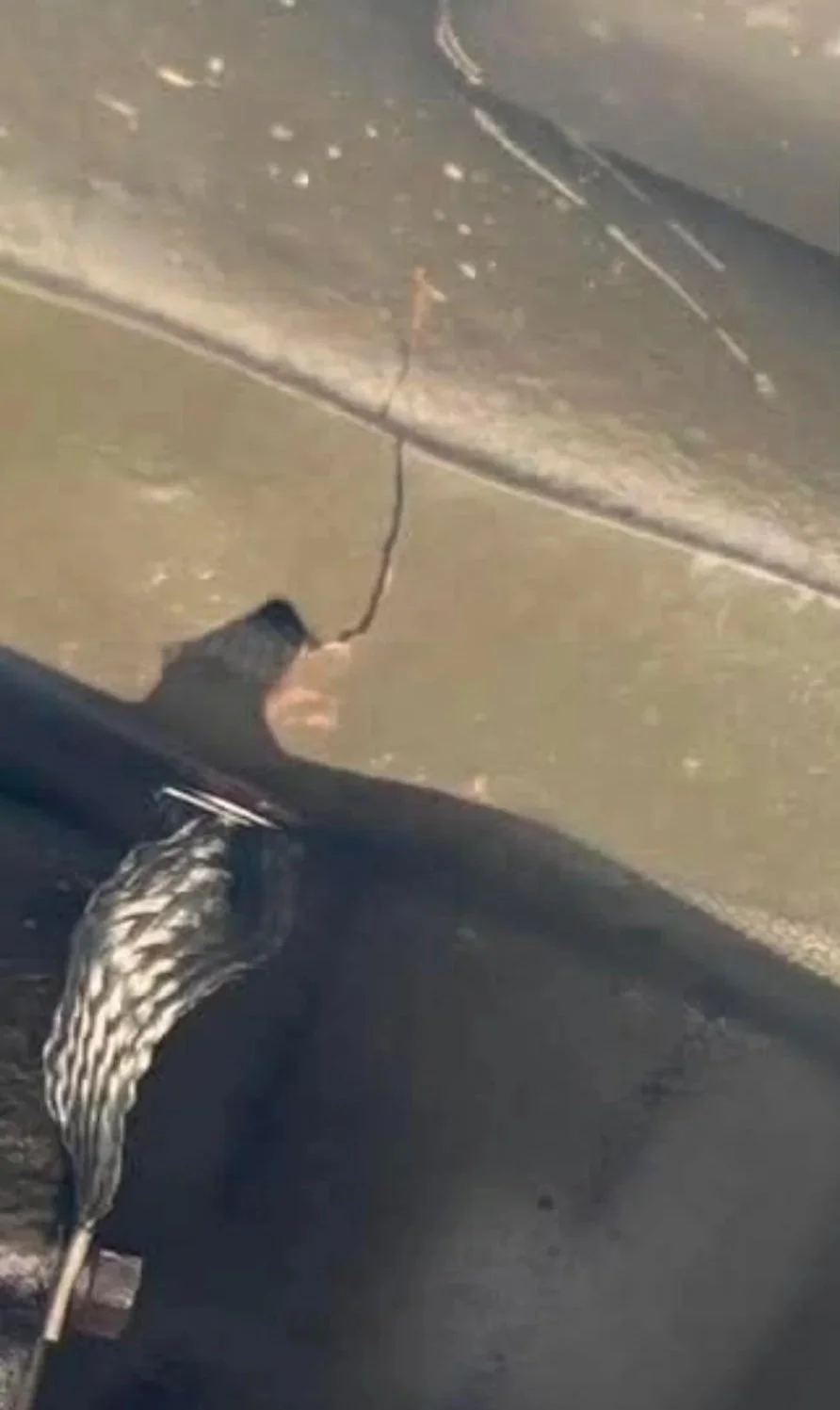
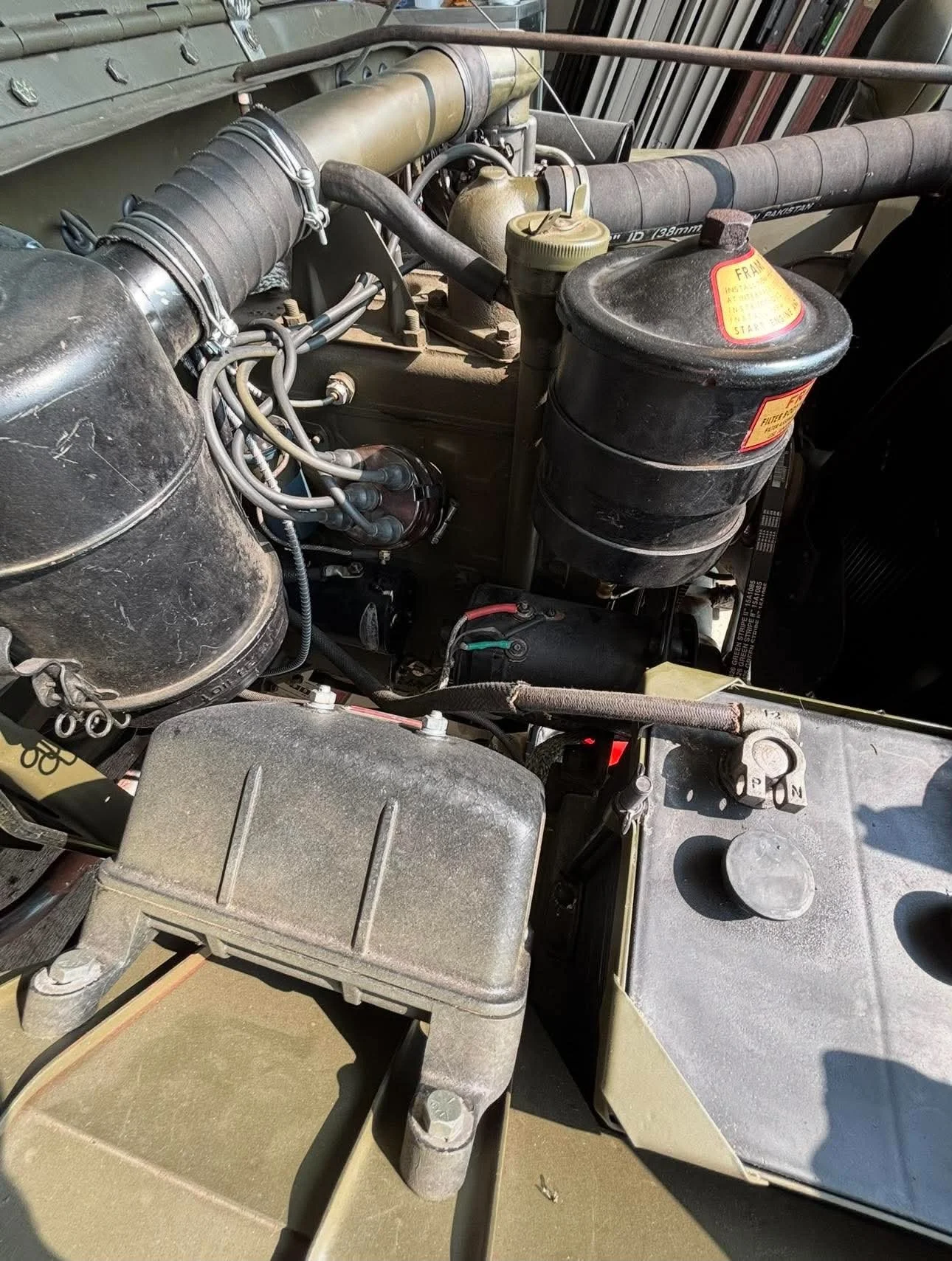
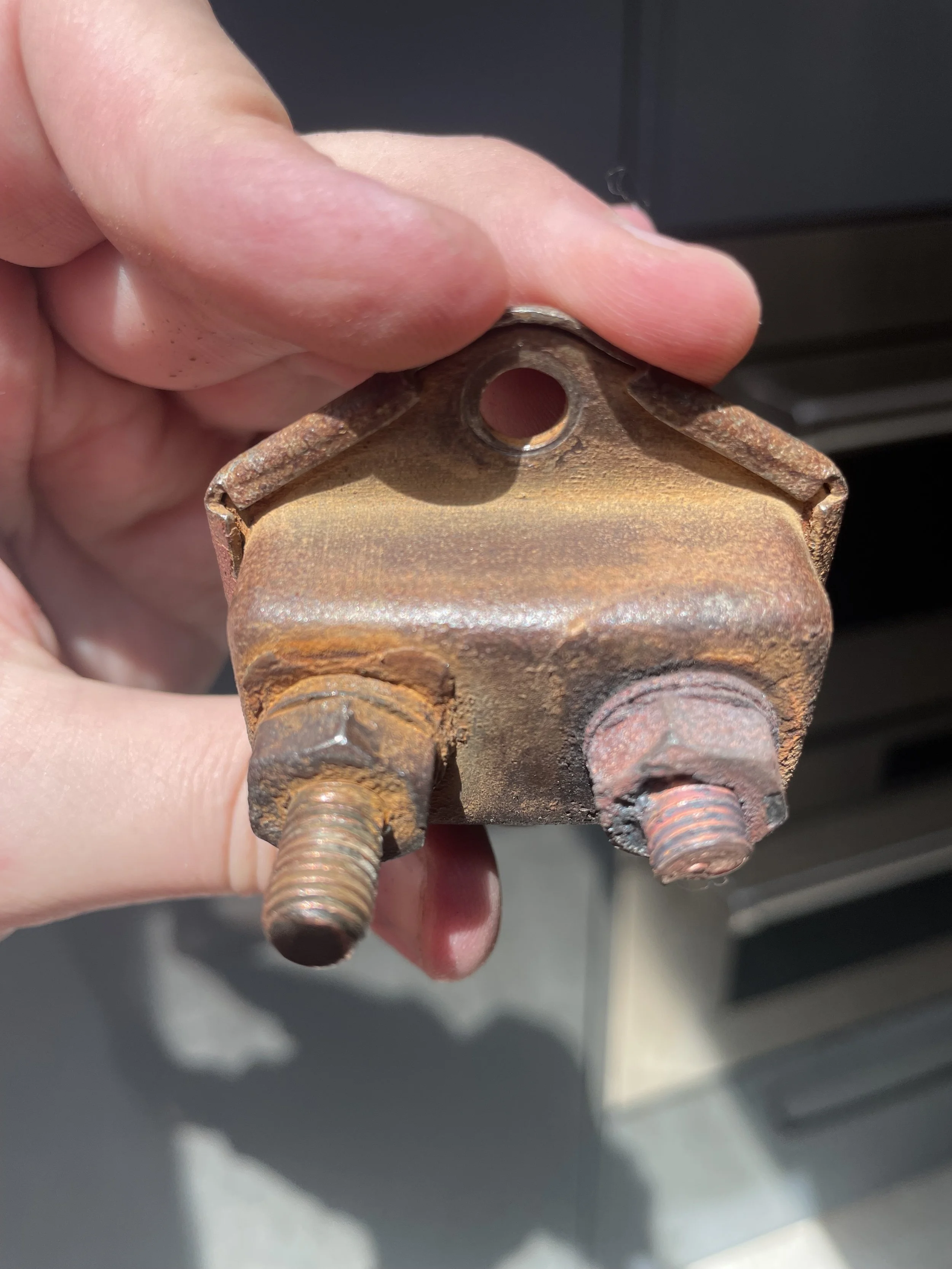
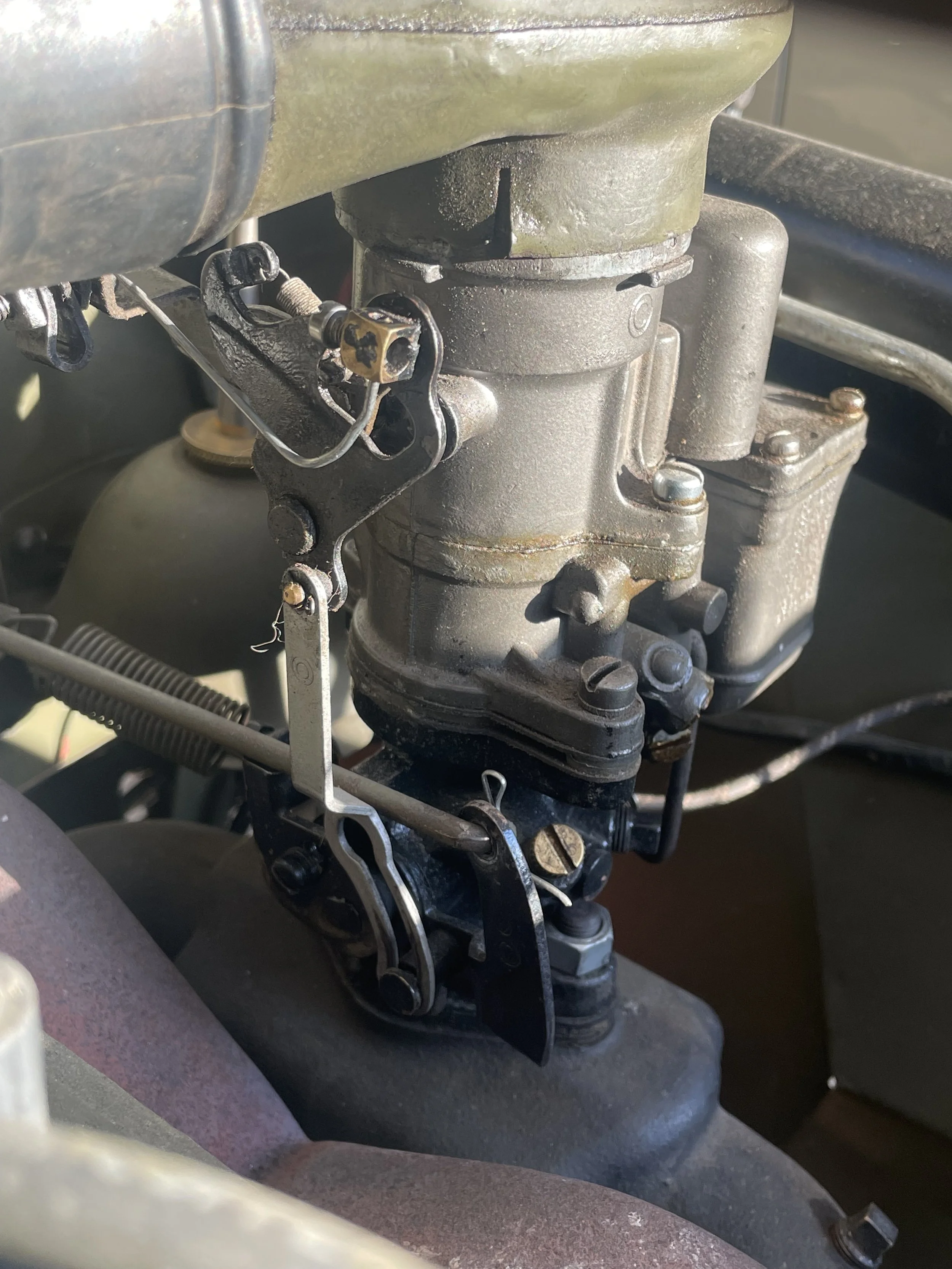
Current work focuses on improving the 6 volt starting and charging system, replacing worn electrical switches, correcting intermittent lighting, reconnecting the hand throttle, investigating noise in third gear, correcting the speedometer, repairing the transfer case leak, and staying ahead of brakes, steering, tires, suspension, fluids, and lubrication.
Each repair teaches us something new about the Jeep and helps prepare it for its next drive.
Help Keep MB 449586 Running
This Jeep is not meant to disappear into a private collection.
The goal is to keep it running, driving, maintained, and shared with people who enjoy history, machinery, and the simple pleasure of seeing an old Jeep still doing what it was built to do.
Contributions help support electrical repairs, drivetrain work, fluids, lubrication, replacement parts, safety inspections, historical research, and continued preservation.
Every contribution helps keep MB 449586 running for the next person who stops, scans the QR code, learns something new, and smiles.
Explore the Jeep
The photographs below offer a closer look at MB 449586.
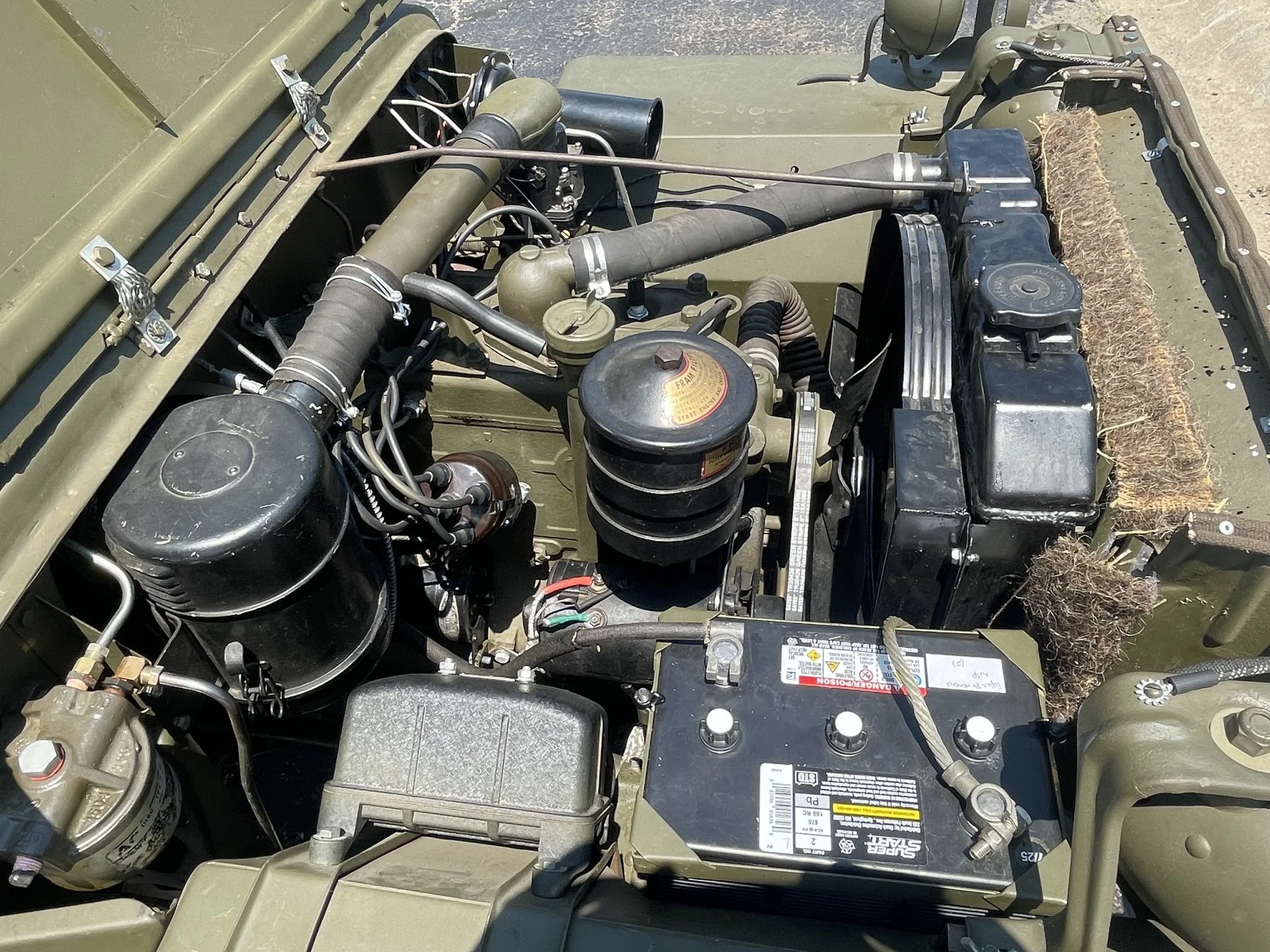
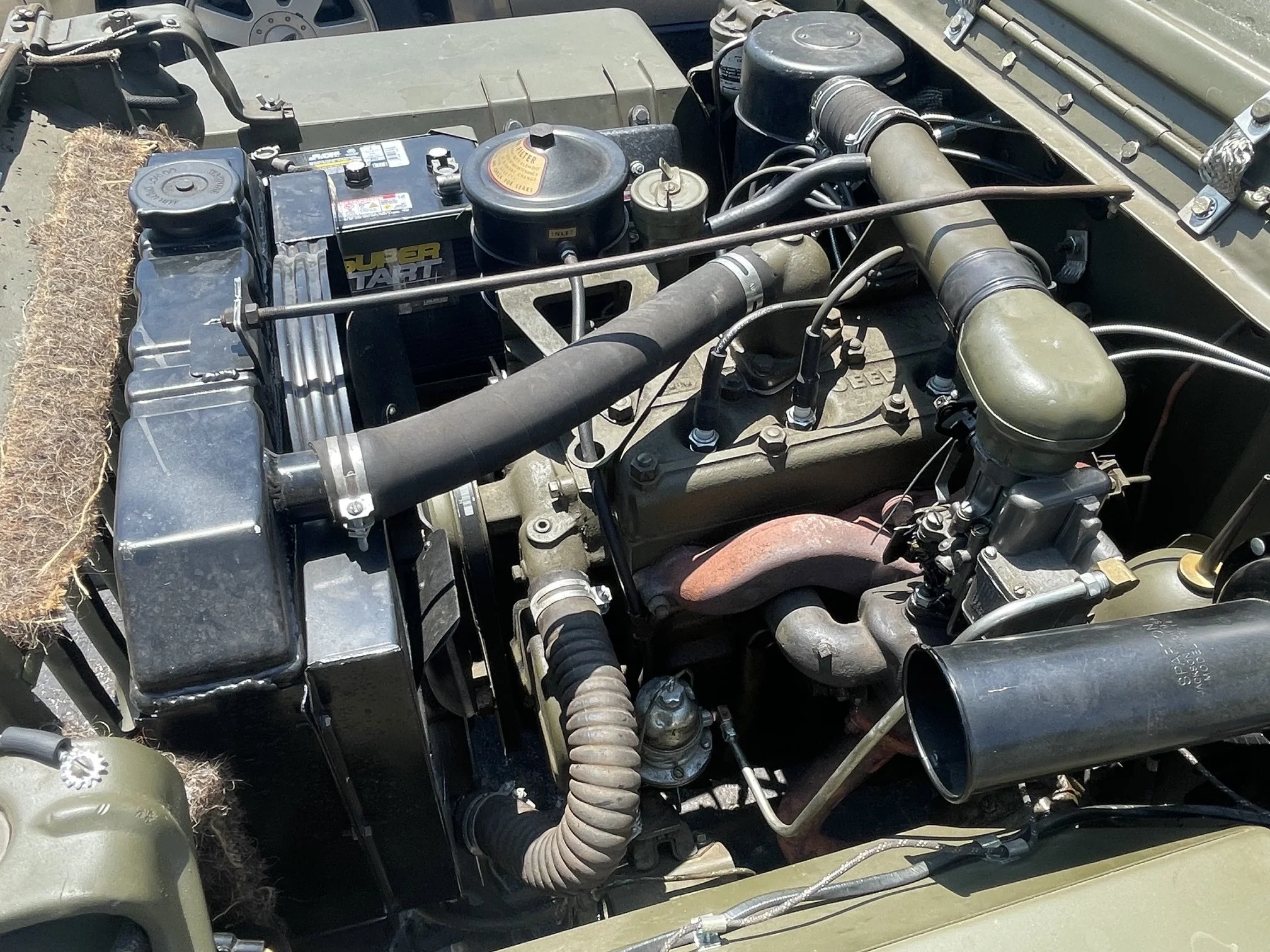
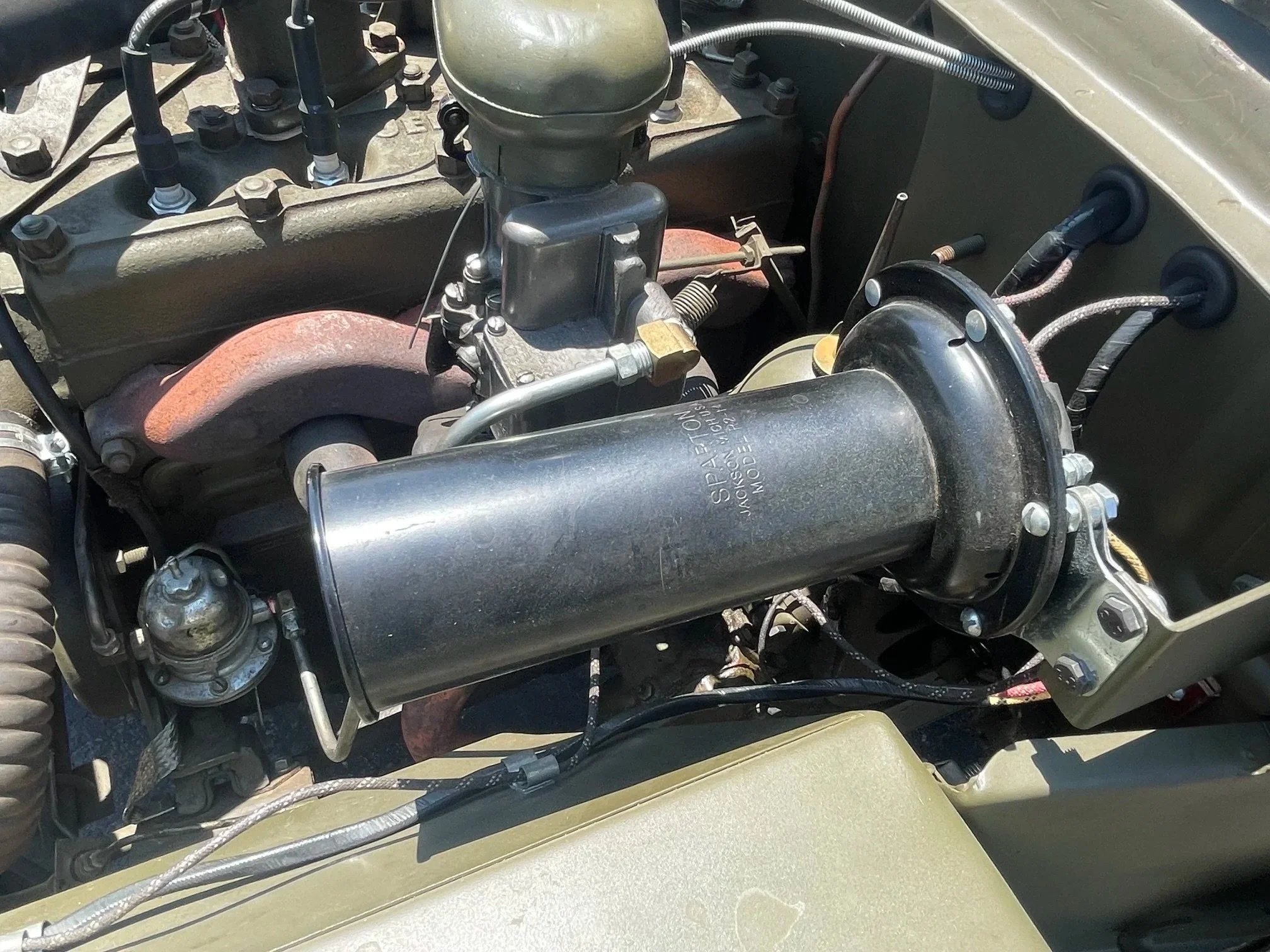
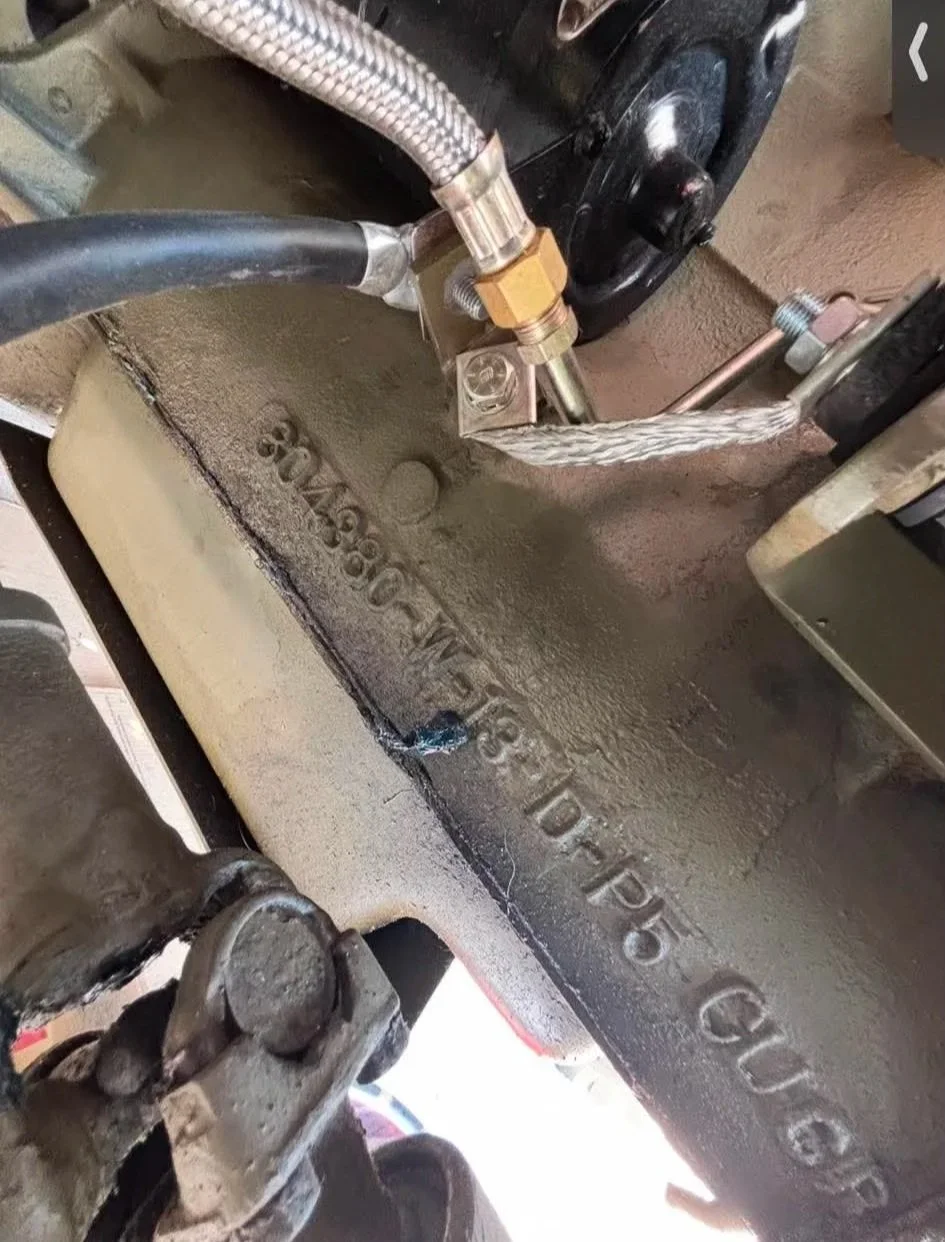
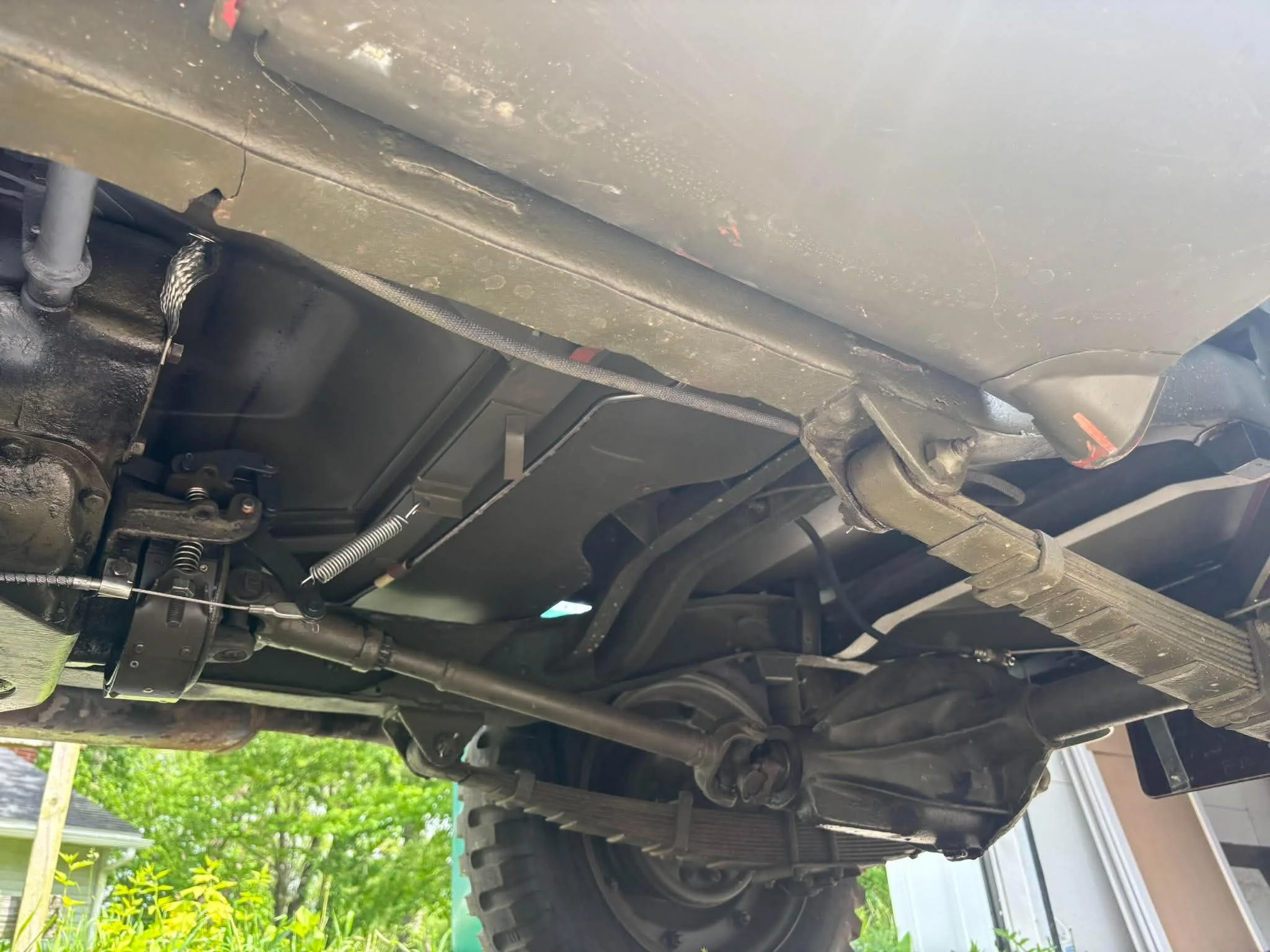
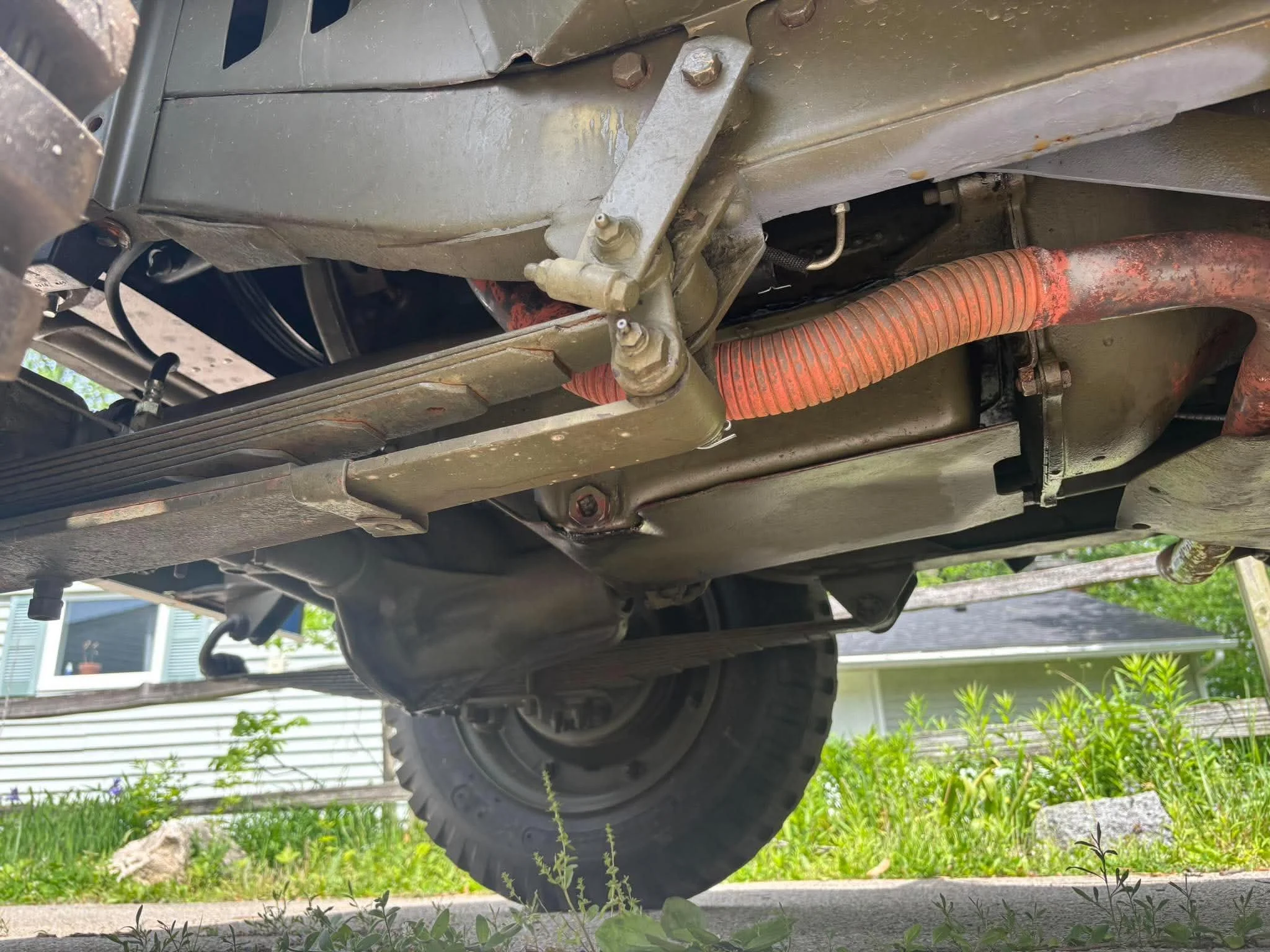
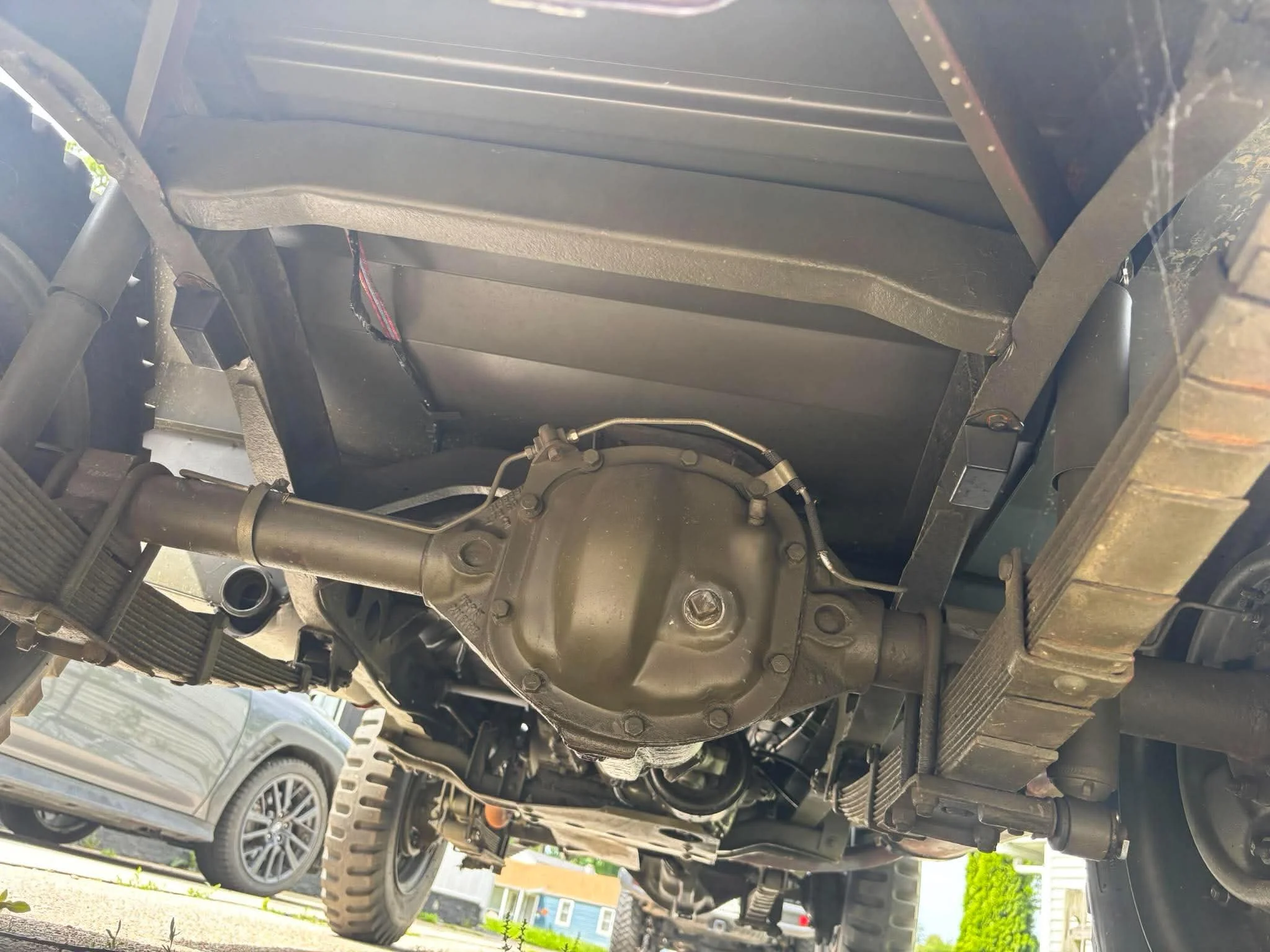
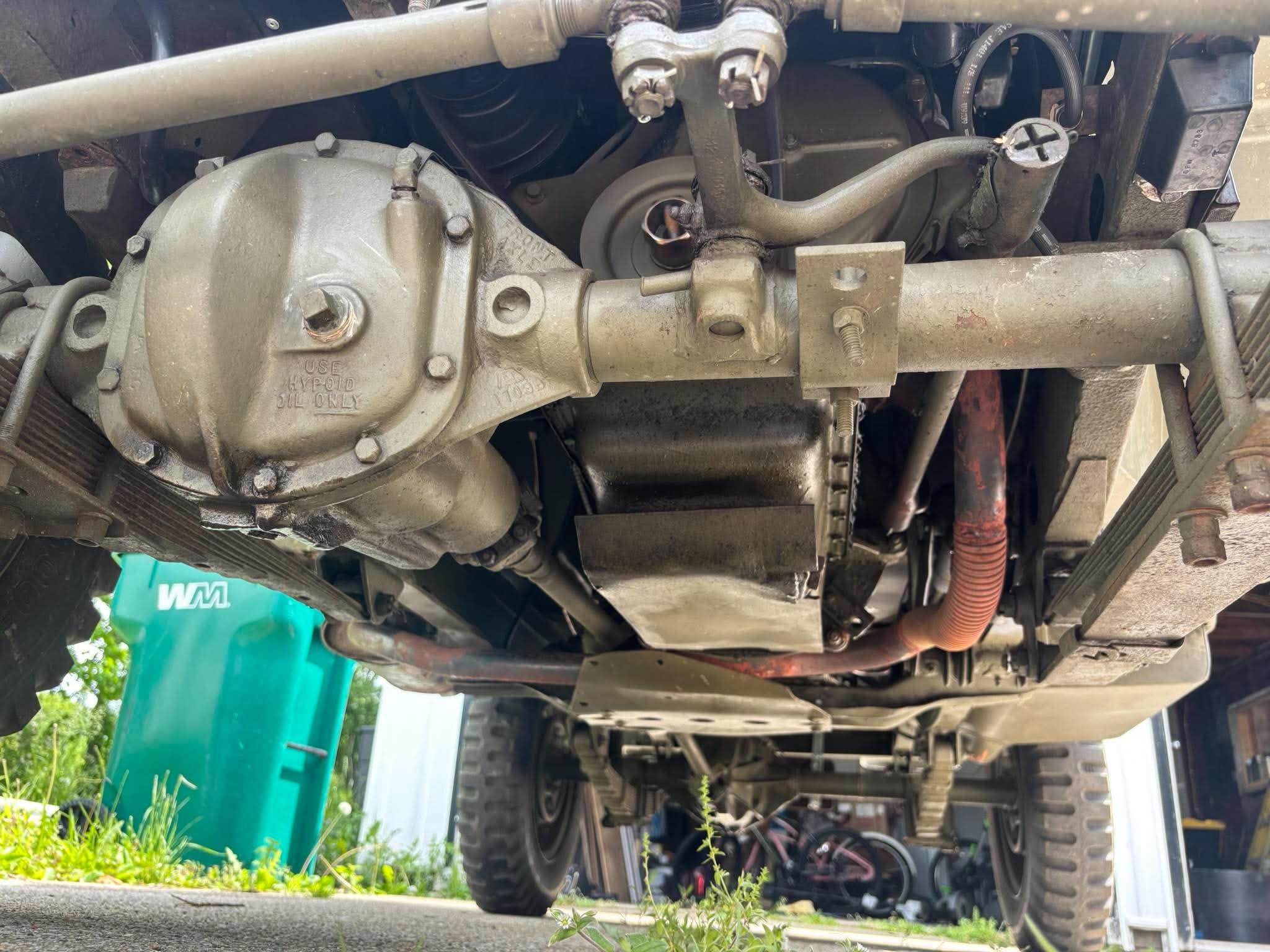
You will see its serial number plates, engine compartment, unit markings, controls, axles, differentials, undercarriage, repairs, wear, and details that are easy to miss when walking past it.
Some photographs show imperfections and ongoing work. That is intentional.
This Jeep is not presented as flawless. It is presented honestly, as an 80-year-old machine that is still being repaired, driven, shared, and enjoyed.
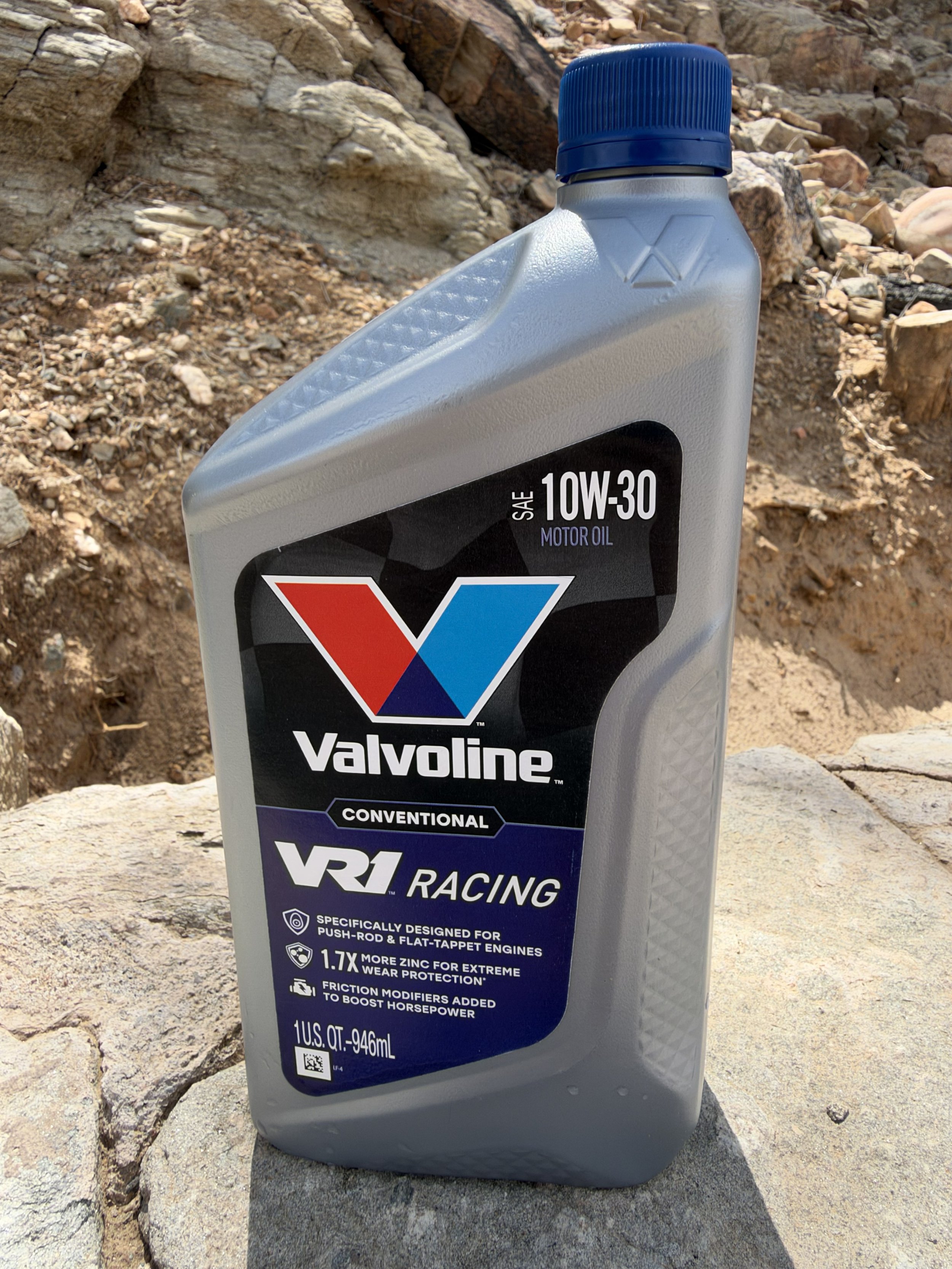
ENGINE OIL
Original Manual: SAE 30 engine oil above 32°F
Using: Valvoline VR1 Racing Conventional 10W-30
Quantity: Approx. 5 qt. Fill this Jeep to dipstick FULL mark.
Purchase Size: 1 qt
Price: $12 per quart
ENGINE OIL FILTER
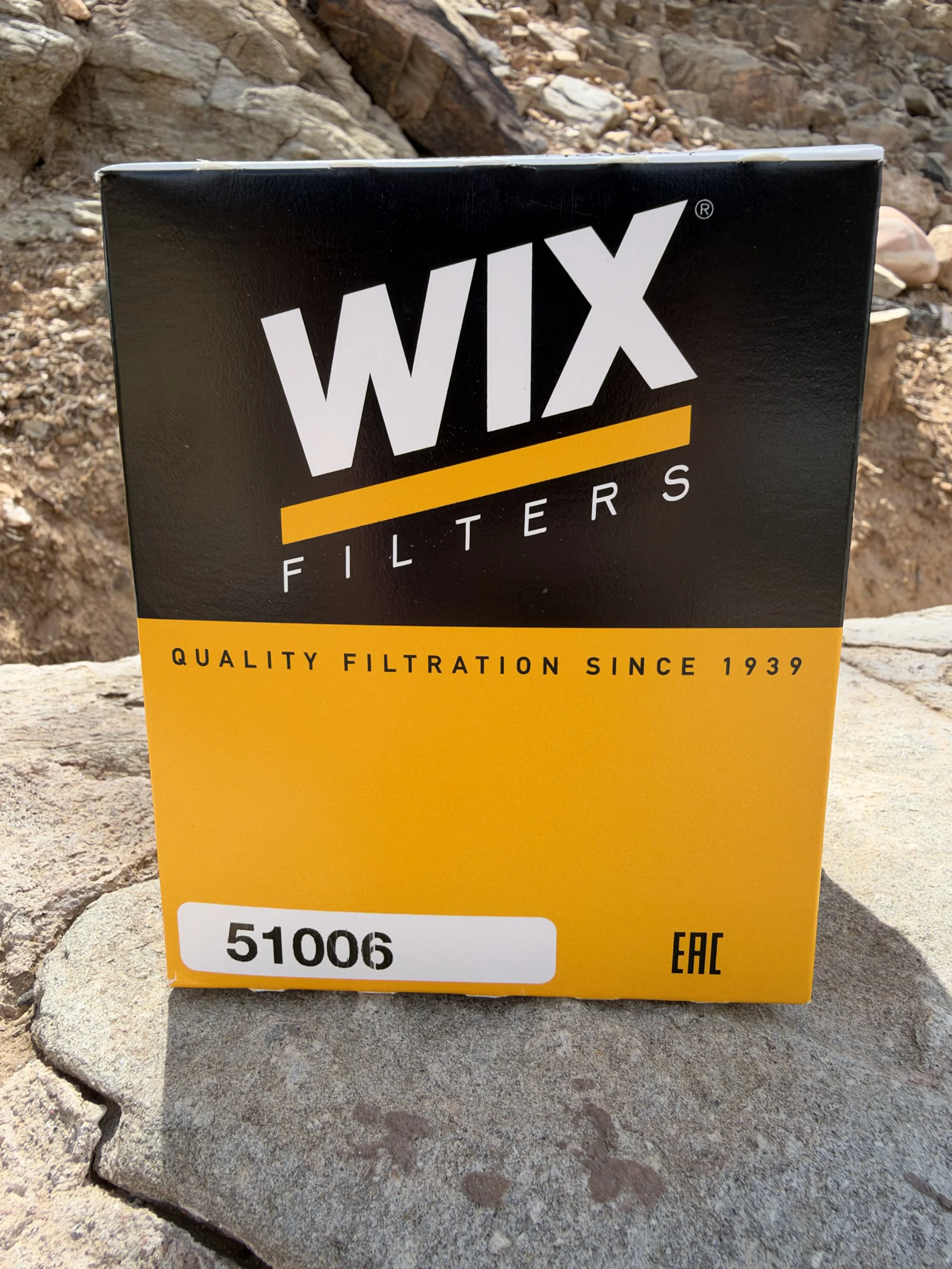
Original Manual: Replaceable bypass oil-filter element
Using: WIX 51006
Quantity: 1 filter
Price: $25 each
FRONT DIFFERENTIAL
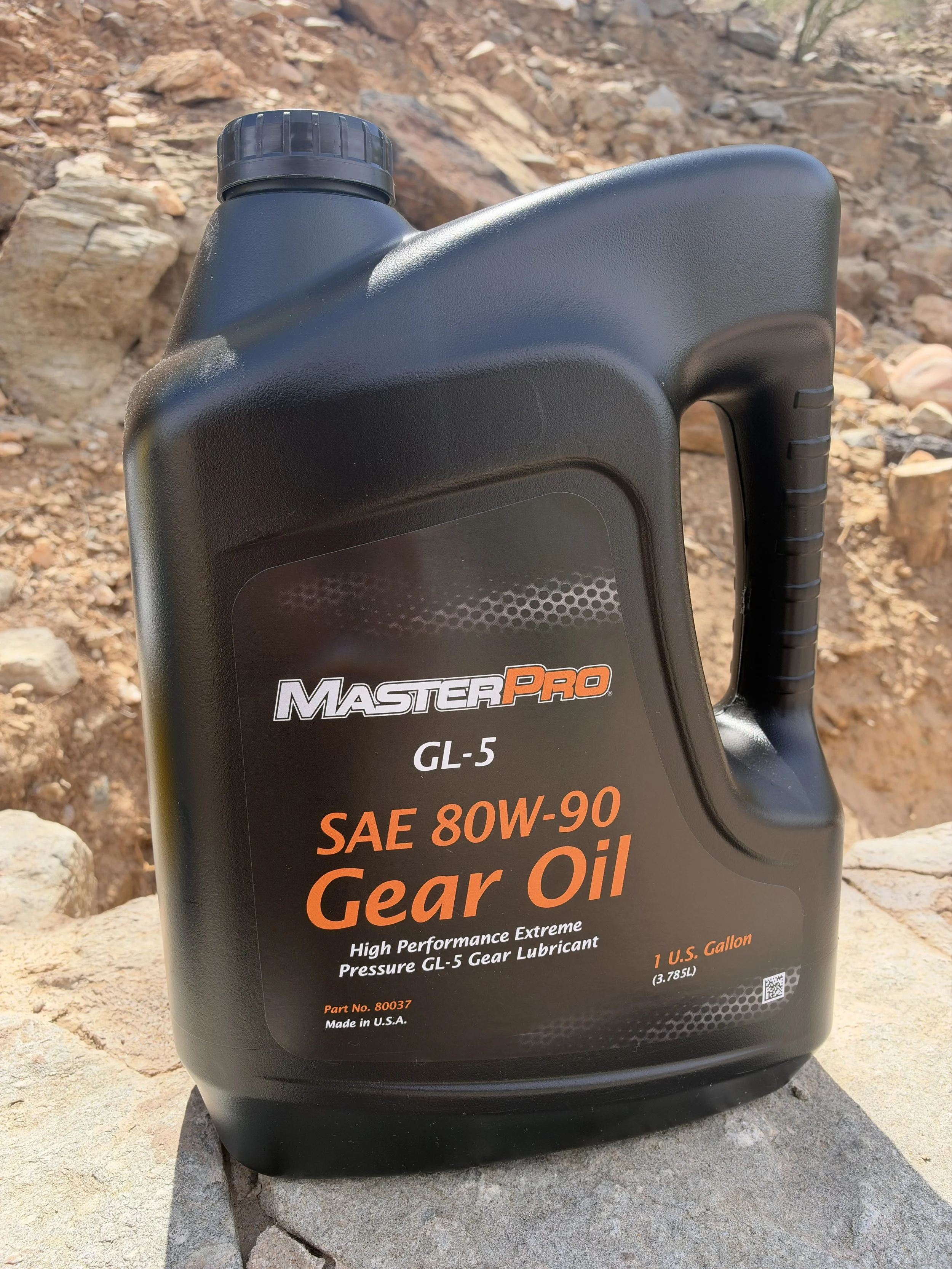
Original Manual: SAE 90 gear lubricant
Using: MasterPro SAE 80W-90 GL-5
Quantity: Approximately 1¼ qt
Fill Level: Bottom of filler opening
Purchase Size: 1 gallon
Price: $35 per gallon
REAR DIFFERENTIAL
Original Manual: SAE 90 gear lubricant
Using: MasterPro SAE 80W-90 GL-5
Quantity: Approximately 1¼ qt
Fill Level: Bottom of filler opening
Purchase Size: Uses same 1-gallon container as front differential
Price: Included with front differential
OIL-BATH AIR CLEANER
Original Manual: SAE 30 engine oil
Using: Valvoline VR1 Racing 10W-30
Quantity: Approximately ⅝ qt, fill to indicated level
Price: Uses engine oil supply
DANA 18 TRANSFER CASE
Original Manual: SAE 90 gear lubricant
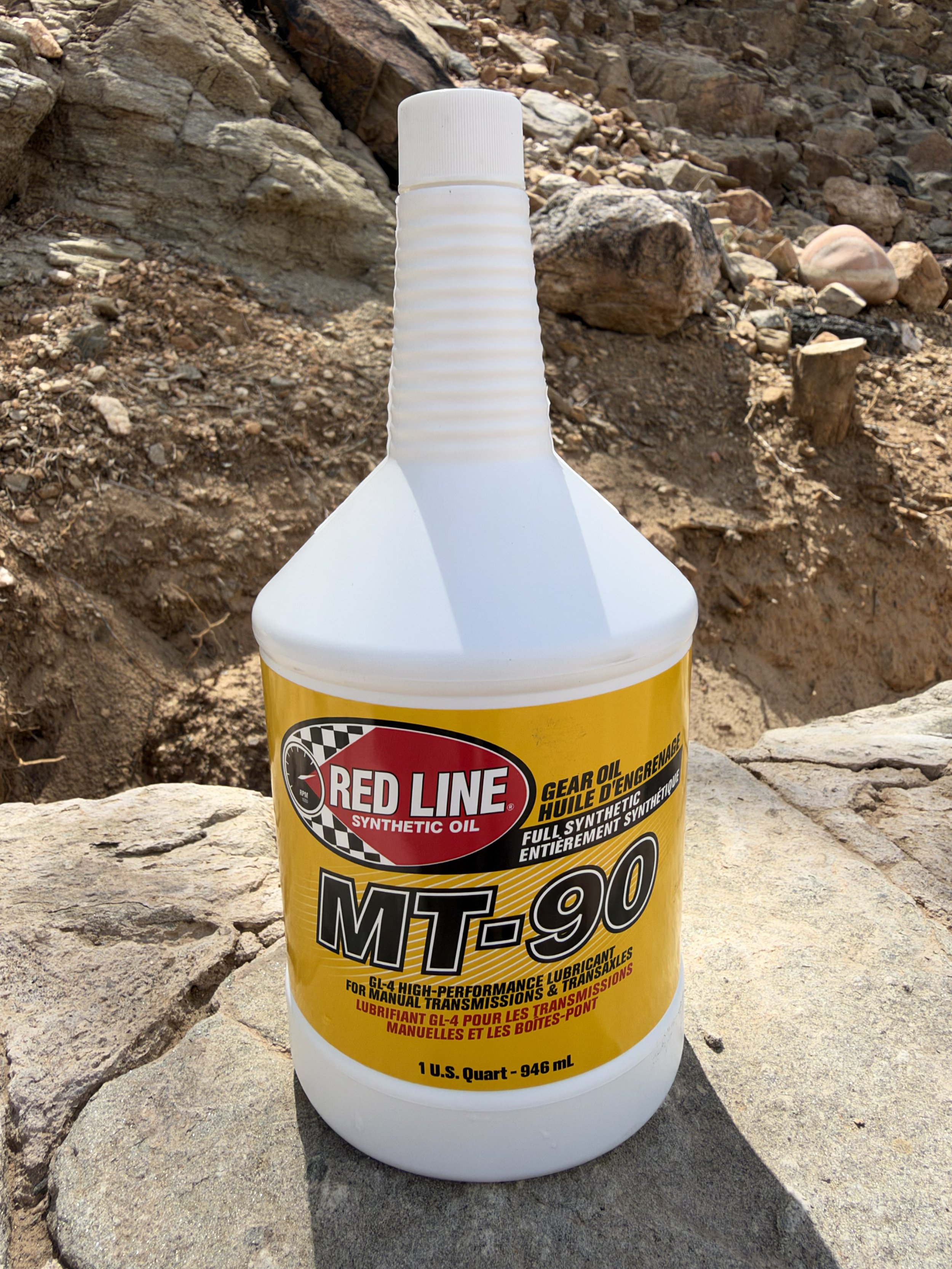
Using: Red Line MT-90 75W-90 GL-4
Quantity: Approximately 1½ qt
Fill Level: Bottom of filler opening
Purchase Size: 1 qt
Price: $25 per quart
T-84 TRANSMISSION
Original Manual: SAE 90 gear lubricant
Using: Red Line MT-90 75W-90 GL-4
Quantity: Approximately ¾ qt
Fill Level: Bottom of filler opening
Purchase Size: 1 qt
Price: $25 per quart
CHASSIS & U-JOINT GREASE
Original Manual: General Purpose Grease No. 1 above 32°F
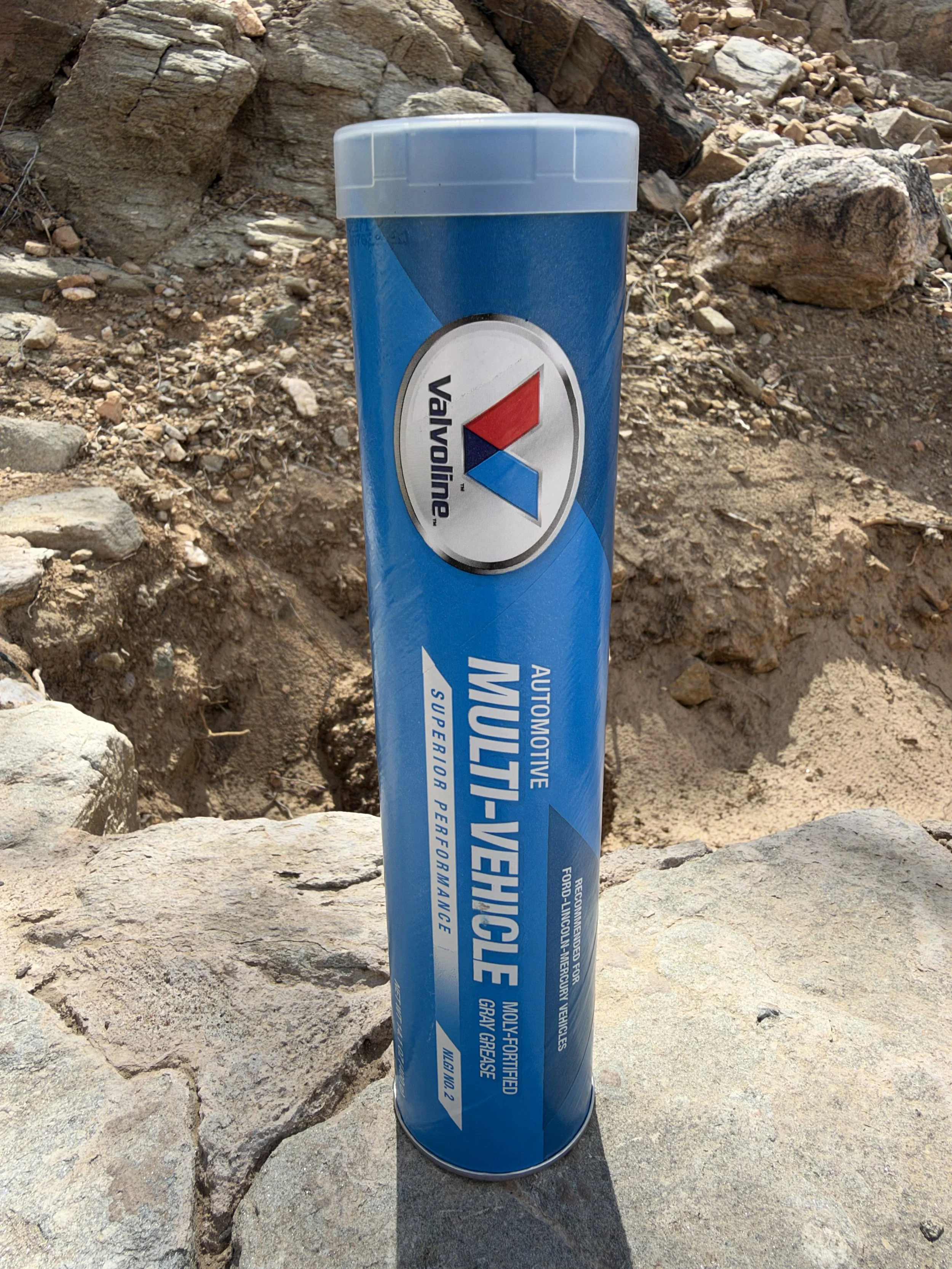
Using: Valvoline Multi-Vehicle Moly-Fortified Gray Grease, NLGI #2
Quantity: As required at grease fittings
Purchase Size: 14.1 oz cartridge
Price: $10 per cartridge
FRONT STEERING KNUCKLES
Original Manual: General Purpose Grease No. 1 above 32°F
Using: Product still to be selected
Quantity: Approximately ¼ qt per knuckle
Total: Approximately ½ qt
Price: TBD
COOLANT
Original Manual: Water with antifreeze as required for temperature conditions
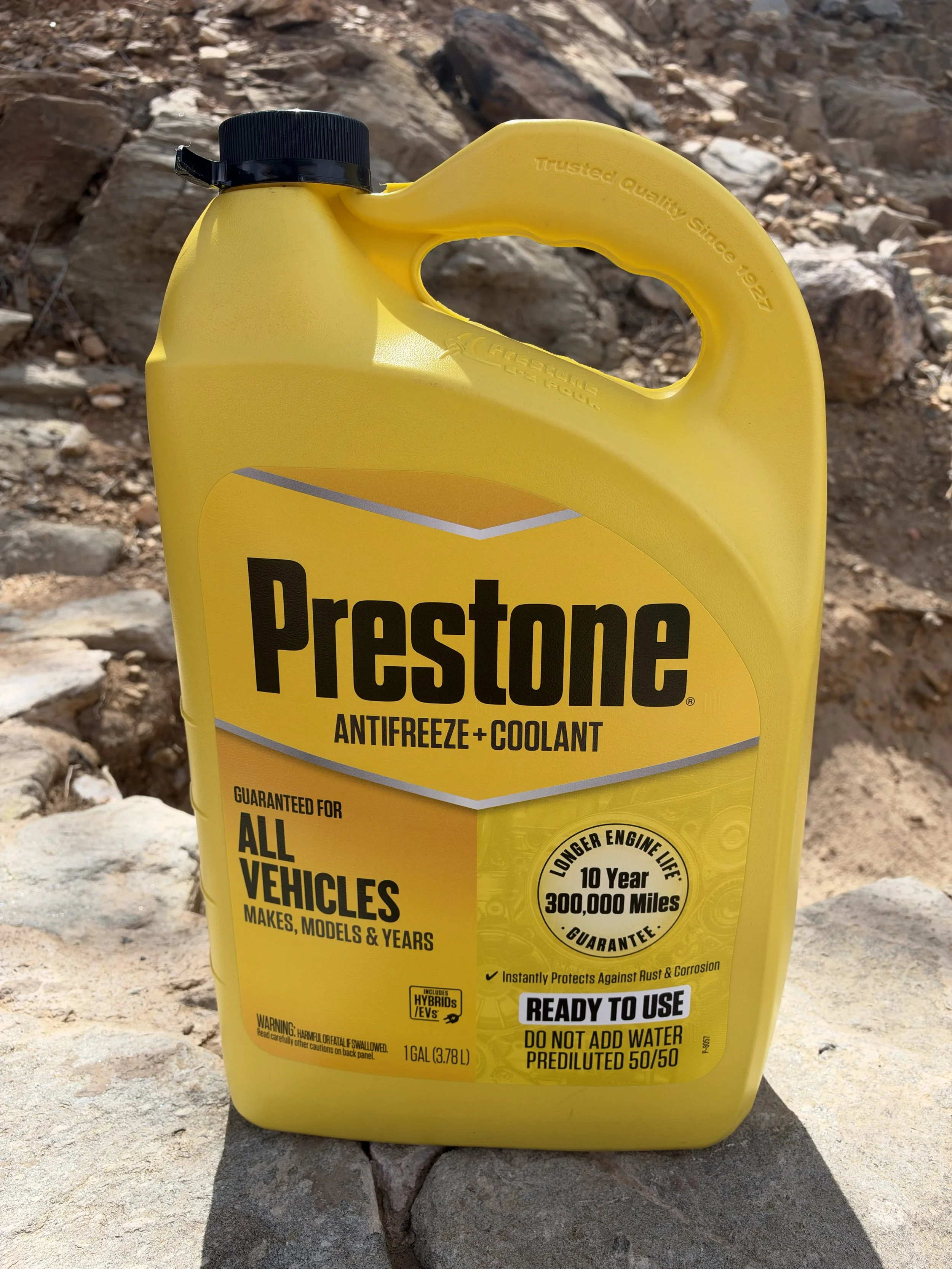
Using: Prestone All Vehicles Ready-to-Use 50/50 Antifreeze + Coolant
System Capacity: Approximately 11 qt, 2.75 gal
Purchase Size: 1 gallon
Price: $15 per gallon
WHEEL BEARINGS
Original Manual: General Purpose/Wheel Bearing Grease
Using: Valvoline Multi-Vehicle Moly-Fortified Gray Grease, NLGI #2
Quantity: Pack inner and outer wheel bearings as required
Purchase Size: 14.1 oz cartridge
Price: $10 per cartridge